Last updated November 2026.
The most reliable way to coordinate branded workwear for a national team is to set the rules centrally and let each site order within them. One person or team owns an approved range, a short workwear brand guide and the relationship with a single supplier. Site managers then order from that range for their own staff, through one channel, within a set allowance per person. State safety laws, award conditions and climate differences are built into the range from the start, so a site in Darwin and a site in Hobart are wearing the same brand in garments that suit them.
When national workwear goes wrong, the cause is usually that nobody owns the program. Each state finds its own supplier, logos drift and the business pays more for garments that don't match.
"The national teams that stay consistent usually have one approved range, one place to order and someone who answers the questions. When any of those goes missing, each state ends up buying its own polos within a year."
Jerome Abrahams, owner, Crest Promos
Choosing an ordering model
National businesses usually run workwear from head office, site by site or as a mix of the two. The right one depends on how many sites you have, how much the roles differ between them and how much admin the national office can take on.
| Central | Devolved | Hybrid | |
|---|---|---|---|
| How it works | The national office places every order and ships to sites | Each site or state chooses and orders its own workwear | The national office sets the range, supplier and allowances, and sites order within them |
| Brand consistency | High | Low, and it usually drifts within a year or two | High |
| Speed for new starters | Slow, because every request goes through one inbox | Fast | Fast |
| Admin for the national office | Heavy | Light | Moderate, mostly reviewing reports |
| Cost control | Strong | Weak, with many suppliers and no volume pricing | Strong, through allowances and one supplier |
| Suits | A handful of sites, or very similar roles everywhere | Rarely suits a national brand | Most businesses with sites in several states |
For most national teams, the hybrid model gives the best balance. It keeps one supplier and one look, but site managers don't have to email head office every time a new starter needs a polo. The rest of this guide assumes a hybrid setup, though most of it applies to a central model too.
Roles and responsibilities
A hybrid model only works if everyone knows their part. Write this down and share it with every site manager.
| Task | National program owner | Site or state manager | Supplier | Staff member |
|---|---|---|---|---|
| Approve the range and brand guide | Decides | Gives feedback | Advises on garments and decoration | Gives feedback through surveys |
| Set allowances per role | Decides | Requests changes | Provides pricing | None |
| Order for new starters | Reviews reports | Places the order | Picks, packs and delivers | Confirms size |
| Collect sizes | Sets the process | Collects and checks | Supplies fitting kits | Tries on and submits |
| Check safety and award requirements | Owns the national view | Raises local requirements | Supplies compliance details for garments | None |
| Handle faults and exchanges | Escalation point | Reports the problem | Replaces or repairs | Reports the problem |
| Review spend and stock | Quarterly review | Monthly check of own site | Supplies reports | None |
The national program owner doesn't have to be a full-time role. In many businesses it sits with operations, HR or marketing, as a few hours a month once the program is running. What matters is that one named person makes the decisions, so site managers and the supplier aren't left choosing between conflicting instructions. That person should also ask staff about fit and comfort before bulk orders, because a range that fits a wide spread of body types gets worn properly.
Setting up the program
An approved range
Keep the range short. A small core of garments usually covers a national team, such as a polo, a long-sleeve work shirt, a softshell or fleece jacket, a cap and a beanie, plus role-specific items like hi-vis, chef wear or aprons. Every extra style is another set of sizes to stock and another colour that can go out of production.
Choose garments from established workwear and corporatewear brands that keep their core styles in the range for years, in quality materials and performance fabrics that suit each role. Some businesses suit a more casual look, while others need a sharper presentation, and a short range can still include different garments for different jobs while keeping one look. When a style is discontinued, a national team either reissues everyone or ends up with two versions of the uniform. Ask your supplier how long each style has been in the range and whether the maker has announced any changes.
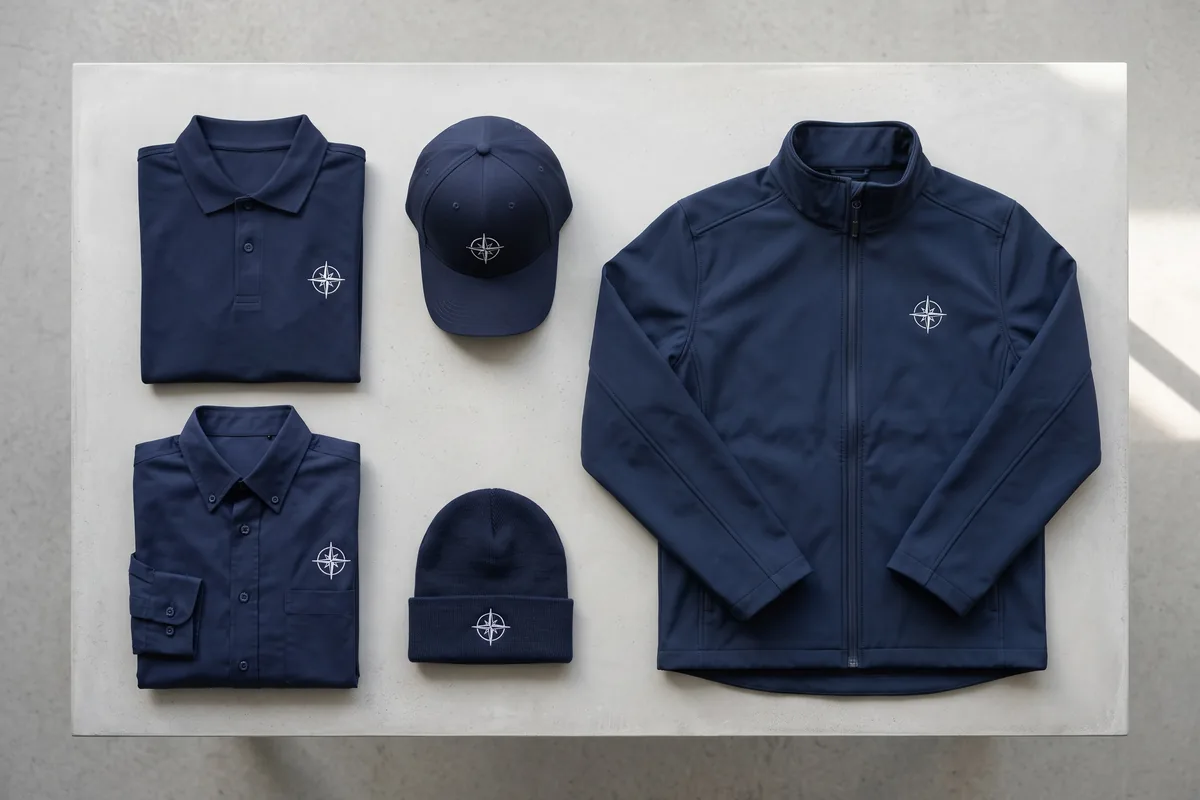
A workwear brand guide for branded uniforms
A one or two page guide stops the logo drifting between states. It should show:
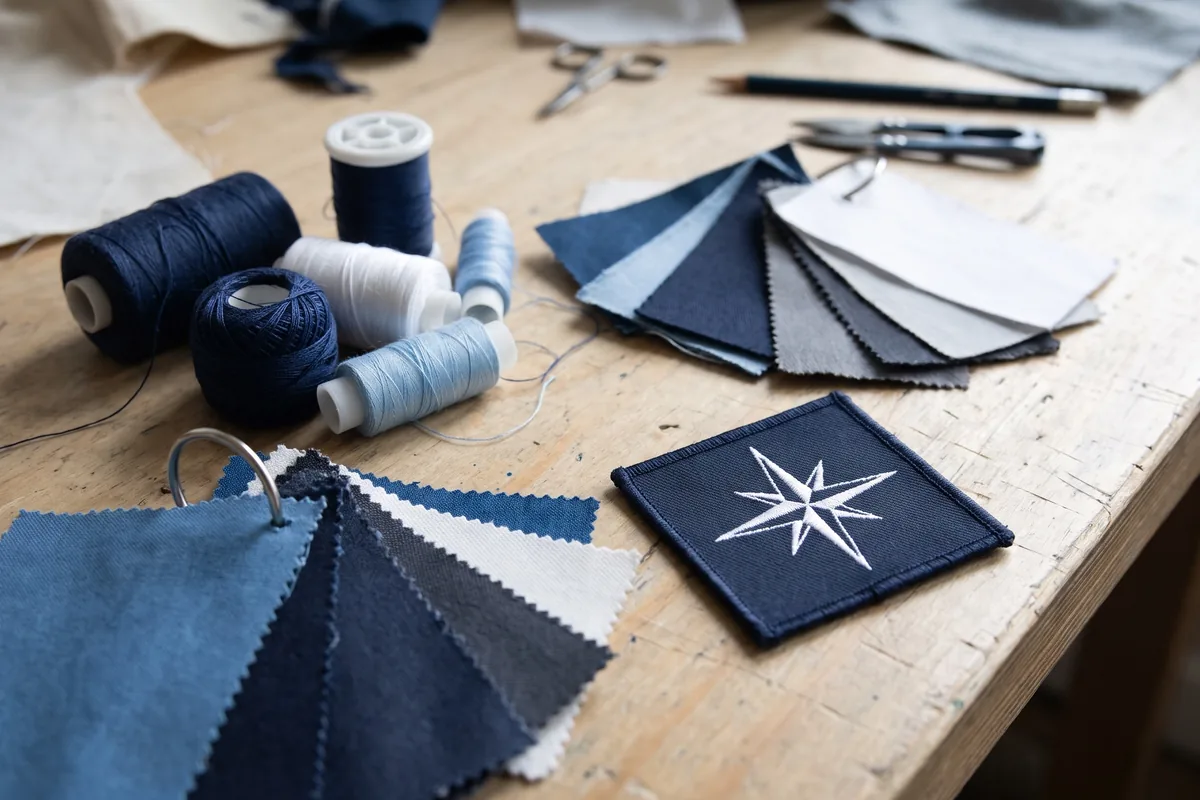
- The approved logo files for embroidery and printing, with thread and ink colours matched to your brand's Pantone references.
- The logo size and position on each garment, such as a set width on the left chest.
- The garment colours allowed and the ones that aren't.
- How names, role titles or site names are added, if at all.
- What staff can and can't wear with the uniform, such as their own jackets or hats.
Keep the logo and embroidery files with your supplier as well, so every reorder is stitched from the same file.
One place to order personalised workwear
Site managers need a simple way to order within the rules. For smaller teams, that can be a practical order form sent to one email address at the supplier. For larger teams, an online ordering portal with the approved range, sizes and each site's allowance built in saves time and stops off-range orders. Either way, orders should go through one channel so the supplier and the national owner can see everything, and sizing errors are easier to catch.
Allowances by role
Set a yearly allowance for each role, as a number of items or a dollar amount, based on how quickly each role actually wears garments out, and decide what happens when someone needs more. A field technician might need five shirts and two jackets a year, while an office-based manager might need three polos and one jacket. Allowances keep spending predictable and give site managers a clear answer when staff ask for extra items.
Allowing for differences between states
A national range has to work under different laws and very different weather. Building those differences into the range at the start is much easier than fixing them site by site later.
Safety laws and hi-vis
Every state and territory except Victoria has adopted a version of the model work health and safety laws, with Western Australia's version in force since March 2022. Victoria still runs its own Occupational Health and Safety Act 2004. The core duties are similar, including the employer's duty to provide personal protective equipment such as hi-vis, but the wording, regulations and regulators differ. Check the rules in each state you operate in, rather than assuming the head office state's approach applies everywhere.
For roles that need high-visibility clothing, choose garments that meet the current Australian standard, AS 4602.1:2024, and make sure the hi-vis versions match the colours and logo placement in your brand guide. For construction and other hard-wearing roles, choose durable fabrics and a logo method suited to the work. Where garments are flame-resistant or arc-rated, check with the maker before adding embroidery, because the wrong thread or a large patch can affect the protection. Our guide to hi-vis workwear standards explains the requirements.
Awards and agreements
If the uniform is compulsory, many modern awards require the employer to supply it or reimburse the cost, and some include a laundry allowance. A national team may be covered by several awards, or by enterprise agreements that differ between states. Check the uniform and allowance clauses for each group of staff using the Fair Work Ombudsman's Find my award tool, and set your allowances to meet the most generous one that applies.
If part of the uniform is optional and you want staff to be able to claim it at tax time, the design needs to be on the Register of Approved Occupational Clothing. The register suggests applying before production, purchase and embroidery start.
Climate and brand colours
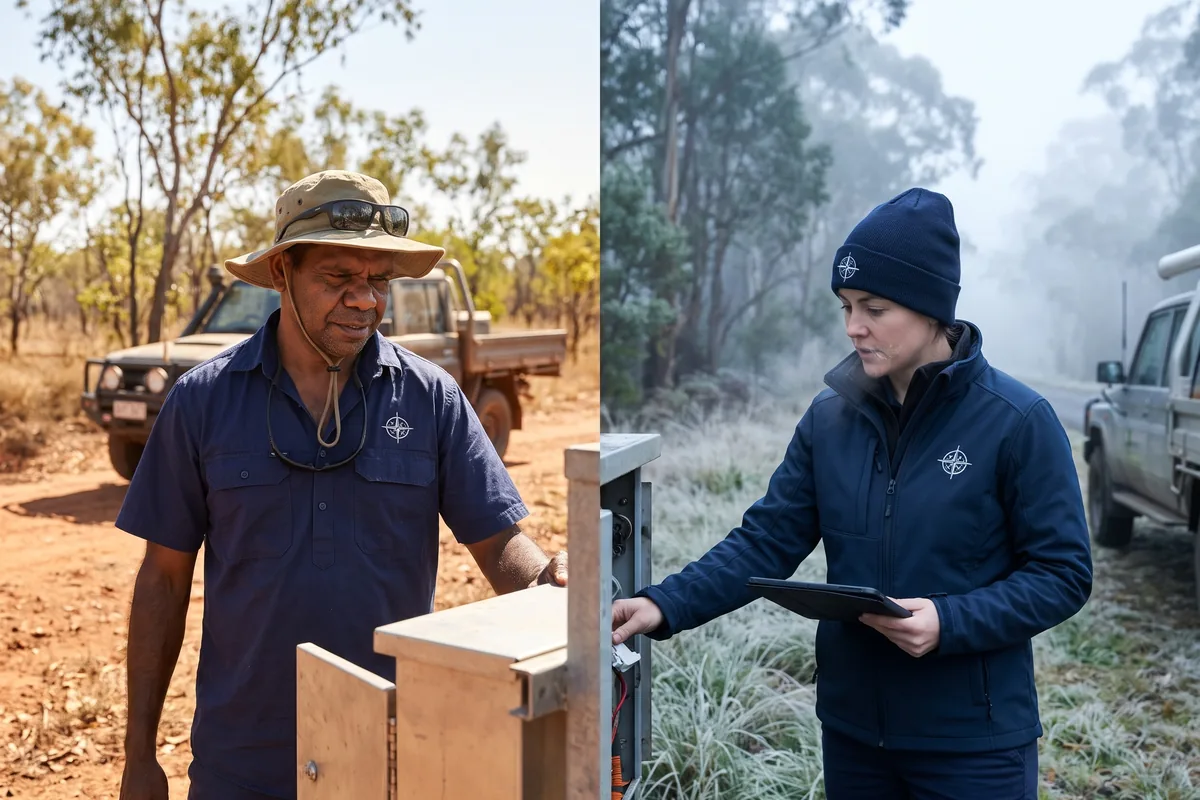
Darwin's average July maximum is close to 31°C, while Canberra's is under 12°C, according to the Bureau of Meteorology. One national jacket won't suit both. Keep the same core colours and logo across the country, but let the range include lighter, breathable fabrics for northern sites, warmer layers for southern and inland sites, and sun-safe hats for anyone working outdoors. Moisture-wicking polyester suits hot sites, and wrinkle-resistant fabrics suit customer-facing roles that need a polished look. Allowances can differ by region too, so a site in Hobart gets an extra jacket where a site in Townsville gets extra shirts. Our comparison of caps and beanies for team uniforms has the temperature figures for each capital.
Stock, freight and staff changes
Holding stock
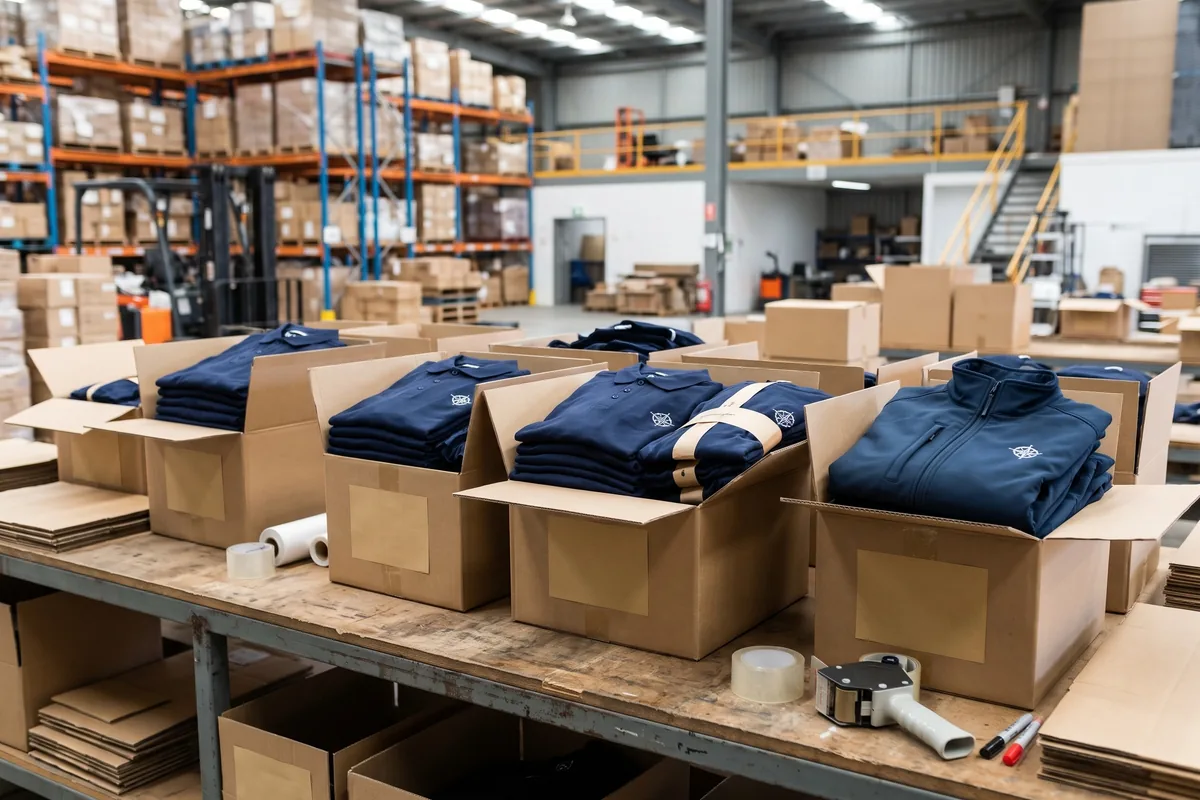
Holding stock at every site ties up money in sizes that may never be needed and leaves cupboards full of the old logo after a rebrand. Holding nothing means every new starter waits for production. The middle ground is to have your supplier hold decorated stock of the core items in common sizes and dispatch it to sites as orders come in. Sites keep only a small buffer, such as two or three polos in the most common sizes, for people who start at short notice.
Freight across the country
Freight from the east coast to Perth, Darwin or regional sites can take a week or more and costs noticeably more. Batch orders where you can, for example by asking sites to order on a set day each week or fortnight, and use one consolidated delivery per site rather than many small parcels. For remote sites, keep a slightly larger buffer on hand.
New starters
New starters test the program more often than anything else. Add workwear to the onboarding checklist, with sizes collected when the employment contract is signed, so the order can be placed before day one. If your supplier holds decorated stock, core items can usually be dispatched quickly, without waiting for a production run.
Leavers and returns
Decide what happens to workwear when someone leaves. Branded clothing in circulation can be used to impersonate staff, which is a real risk for businesses that send people into homes or secure sites. Ask leavers to return their workwear, and have it either reissued after cleaning where suitable, debranded or recycled. Record returns against the person, so the national owner can see what's still out there.
Reporting and review
Ask your supplier for a simple report each month or quarter, by site. The national owner only needs a few figures to see whether the program is working:
- Spend by site and by role, against the allowance
- Items ordered outside the approved range, which should be close to zero
- Average time from order to delivery for new starters
- Stock on hand by item and size, and anything that hasn't moved in six months
- Faults, exchanges and returns, by item
Once or twice a year, review the range itself. Look at which items are reordered most and which barely move, ask a sample of staff in different states what's working and what isn't, and check whether any garments are being discontinued by their makers. Recurring complaints or items that staff avoid wearing are a sign the range needs a change. Small changes made at a review, such as swapping a jacket that's too warm for Queensland, cost far less than a full reissue a few years later.
If your business is growing quickly, opening sites or going through a rebrand, plan the change as a rollout rather than through normal ordering. Our guide to managing a uniform rollout across multiple locations covers that process step by step.
Running a national program with Crest Promos
Crest Promos supplies branded workwear and uniforms for businesses with sites across Australia. You deal with one account manager who knows your range, your brand guide and your sites. We can hold decorated stock of your core items and dispatch it to each site as orders come in, packed and labelled by person or location. Quotes and digital proofs are free.
We'll also recommend the right decoration for each garment: embroidery for durable logos on polos, shirts and jackets, screen printing for bold logos on larger runs, heat transfer for small orders or detailed designs, and dye sublimation for full-colour designs on suitable polyester garments.
"We keep every client's logo files, thread colours and garment codes on file, so a site in Perth can reorder a polo three years from now and it will match the one being worn in Sydney."
Jerome Abrahams, owner, Crest Promos
To start, send your sites, headcount and current range through the quote form or call 1300 084 102.
Tell us your sites and roles, and we'll suggest a range and an ordering setup that fits.
About the author
Written by Jerome Abrahams, owner of Crest Promos. Jerome has more than 30 years of experience in promotional products, uniforms and workwear, supplying businesses ranging from single-site teams to national brands such as Meta, JCDecaux, Nutrien, White Claw and amps.
The advice in this article is based on the national and multi-site workwear programs Crest Promos supplies. Legal, award and climate information was checked against the sources below in November 2026. It's general information, so check specific obligations with your HR, legal or safety advisers.
- Safe Work Australia, Model WHS laws
- WorkSafe Victoria, Occupational Health and Safety Act and Regulations
- Fair Work Ombudsman, Find my award
- business.gov.au, Register of Approved Occupational Clothing
- Bureau of Meteorology, Average rainfall and temperatures for Australian capital cities
- Crest Promos, What hi-vis workwear standards do businesses need to meet? (covers AS 4602.1:2024)
- Crest Promos, How do I manage a uniform rollout across multiple locations?
- Crest Promos, Custom caps vs beanies for team uniforms