Last updated November 2026.
For most Australian teams, a custom cap is the better everyday uniform piece, and a beanie is a seasonal extra. If you're choosing branded headwear for staff uniforms across different climates, sites or job types, that's usually the simplest starting point. Caps suit customer-facing staff, events and anyone who works in mild or warm weather, which covers most of the country for most of the year. Beanies earn their place in southern winters, on early starts, in cold rooms and on sites where people are outside before the sun is up. Plenty of businesses issue both, with the same logo, and switch with the seasons.
The right choice affects comfort, safety, uniform consistency and how well your branding shows up on the job, especially when teams move between indoor, outdoor, warm and cold conditions. There's one important exception. If your team works outdoors in the sun, neither a cap nor a beanie counts as proper sun protection. Cancer Council recommends a broad-brimmed, legionnaire or bucket-style hat that shades the face, nose, neck and ears, and ARPANSA, the federal radiation safety agency, notes that baseball caps don't protect the neck and ears. A cap can still be part of the uniform for indoor or short outdoor use, but it shouldn't be the only hat you issue to people who spend their day outside.
This guide compares custom caps and beanies by season, climate and role, then looks at branding options, ordering strategy, uniform policy and the practical side of issuing headwear across multiple locations.
"Most of our uniform clients end up with both. A cap for most of the year and a beanie for the cold months, embroidered with the same logo so the team looks the same whatever the weather."
Jerome Abrahams, owner, Crest Promos
Start with the weather where your team works
The climate in your city does more to settle this than any style preference. A beanie that gets worn every day in Hobart will sit in a drawer in Brisbane.
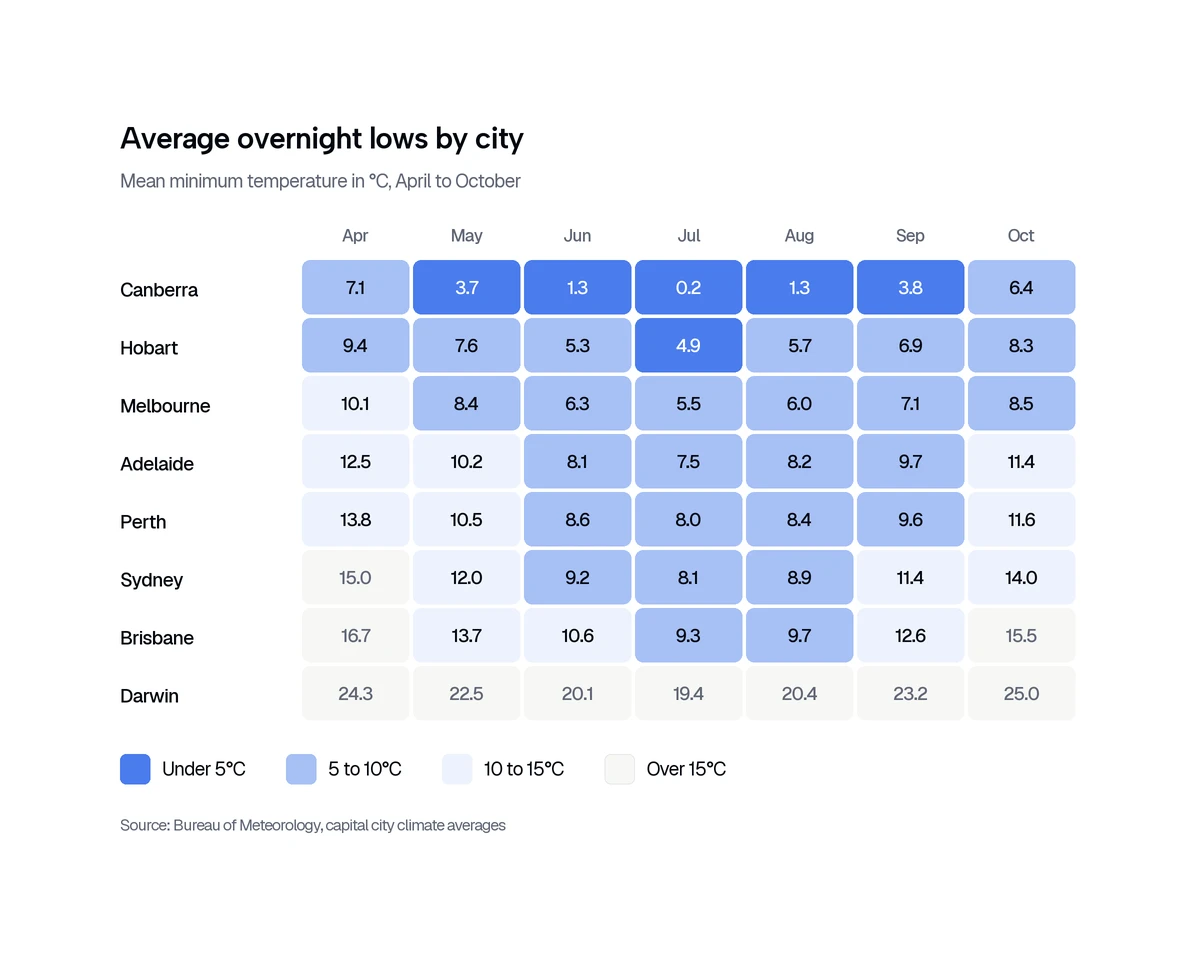
In Canberra, Hobart, Melbourne and Adelaide, a beanie is a practical uniform item from about May to September, and in Canberra it's useful on any early start in the cooler half of the year. Sydney and Perth have a short beanie season, mostly for people who start before sunrise or work outdoors in the evening. In Brisbane, Darwin and the rest of northern Australia, a beanie is rarely needed outside cold rooms, refrigerated transport or inland sites where nights get cold.
If your business has sites in several states, you don't need one answer for everyone. Issue caps across the board and add beanies for the southern and inland sites, or let each site manager choose from the same branded range.
Match the hat to the job
Outdoor work in the sun
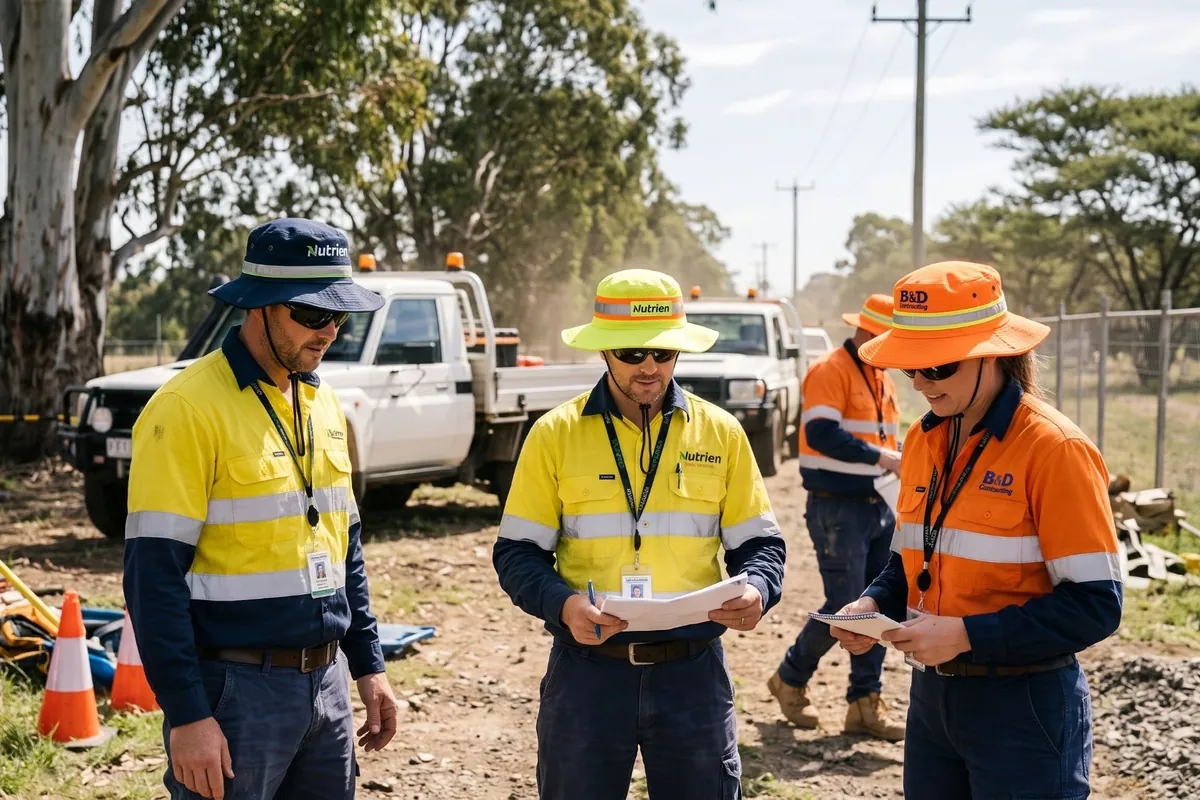
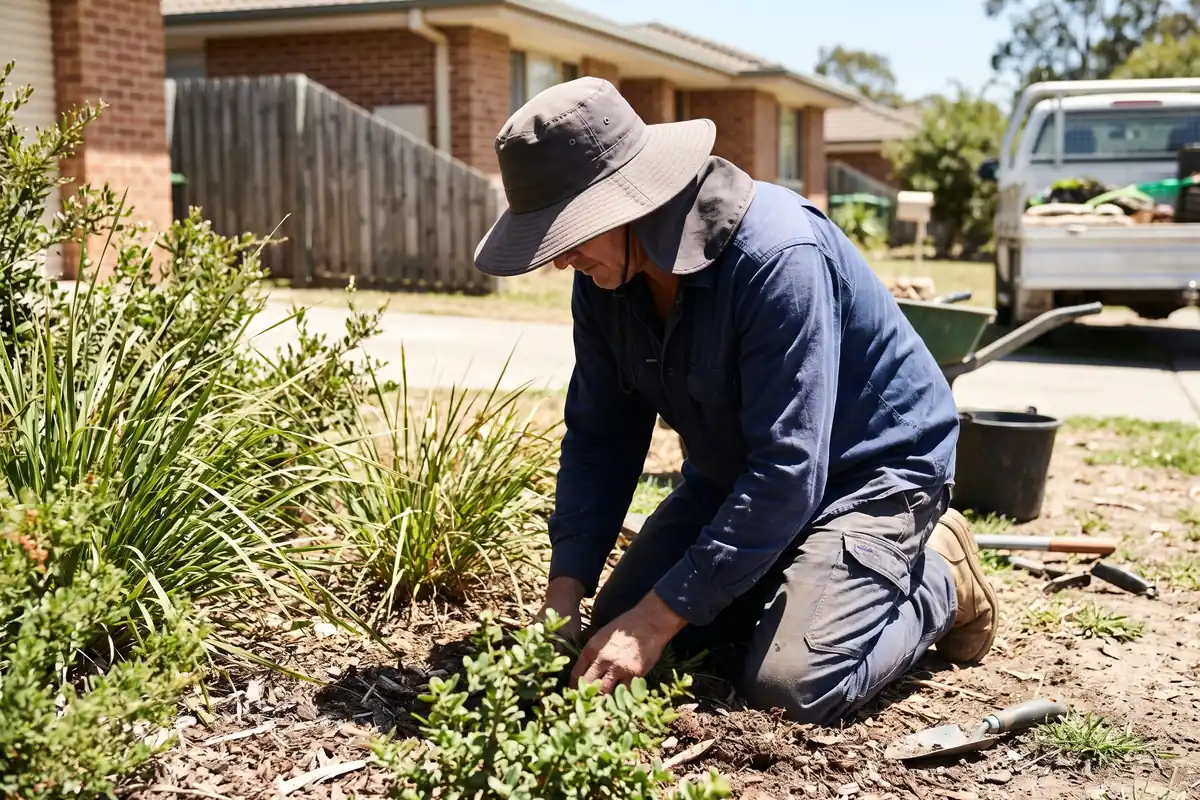
This is where caps fall short. UV exposure is a recognised work health and safety hazard, and Cancer Council's advice is to wear a broad-brimmed, legionnaire or bucket-style hat. ARPANSA's guidance uses a brim of 7.5 cm or more as the benchmark for an adult broad-brimmed hat, and notes that baseball caps leave the neck and ears exposed.
For gardeners, builders, delivery drivers, field staff and anyone else outside for long stretches, issue a sun-safe hat as the main item. A branded cap can still be part of the uniform for travel, client visits and time indoors. Our guide to headwear for outdoor work teams covers sun-safe styles in more detail, and our range includes brim and bucket hats.
Sites with hard hats
On sites where hard hats are required, a beanie worn underneath can stop the harness fitting properly. Check with the hard hat manufacturer before allowing it. Many offer thin winter liners or beanies designed to sit under their helmets, and some can be branded. A cap can't be worn under a hard hat at all, so for these teams the choice is usually a sun brim attachment for summer and an approved liner for winter.
Kitchens and food handling
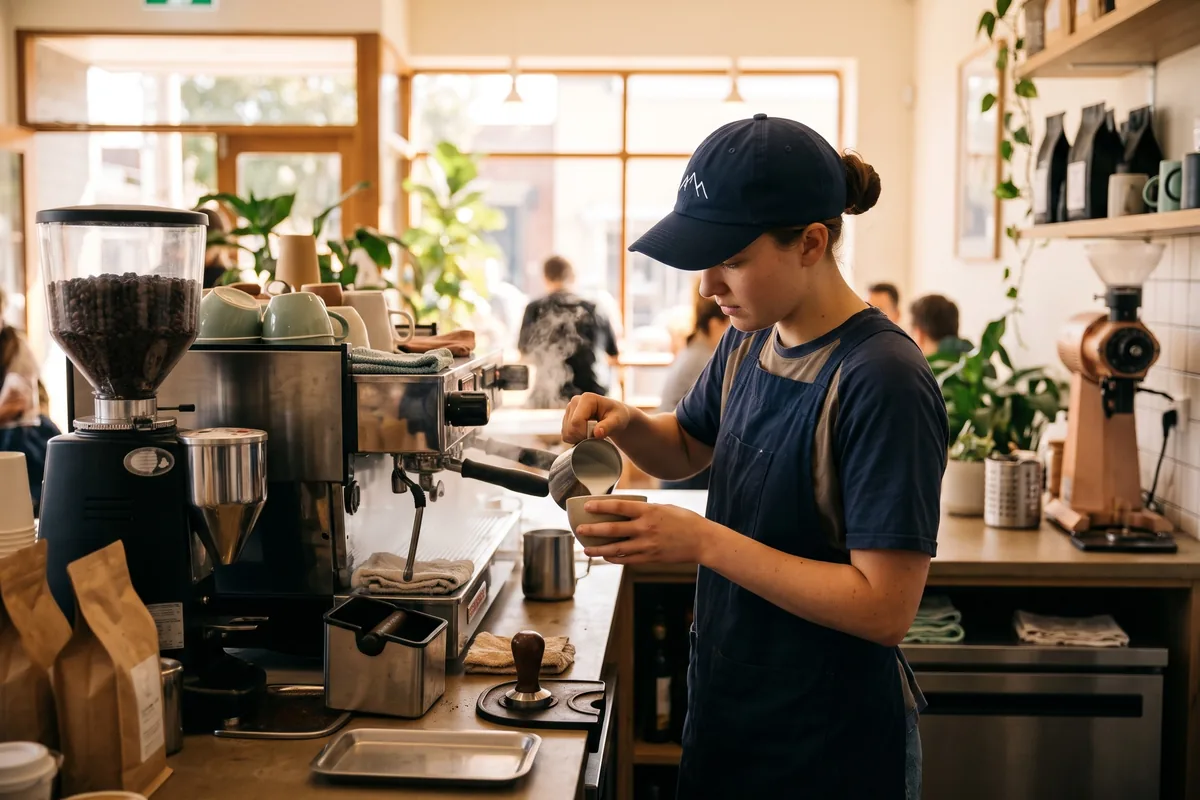
The Food Standards Code requires food handlers to take all practicable measures to stop their hair contaminating food. Caps are a common way to do that in cafes, food trucks and commercial kitchens, and they look tidier than hairnets in front of customers. Beanies are less practical in a hot kitchen, but they work for cold rooms, early bakery shifts and outdoor food stalls in winter.
Customer-facing and indoor roles
In retail, hospitality, events and trade counters, a cap looks more like part of a uniform than a beanie does. It keeps your brand visible in daily customer contact, suits casual and everyday wear, and is easy to wear indoors all year. Caps also suit corporate events and trade shows, because stock styles can be embroidered quickly when timelines are tight, and matching caps help build team spirit on public-facing promotions and event shifts. Beanies suit these roles mainly for outdoor events, markets and front-of-house staff in cold venues.
If staff work near traffic or machinery, both caps and beanies are available in high-visibility colours with reflective trims, which add to their hi-vis clothing rather than replacing it. Our guide to hi-vis workwear standards explains what the clothing itself needs to meet.
Caps and beanies side by side: cap fabrics compared
| Custom cap | Custom beanie | |
|---|---|---|
| Best season | All year in most of Australia | About May to September in southern and inland areas, plus early starts and cold rooms |
| Sizing | Adjustable caps with a strap, buckle or snap closure fit nearly any head, while fitted caps come in set sizes or stretch ranges | Usually one size, with a stretch knit that fits most heads |
| Branding area | Front panel, plus side, back and under-brim, for more flexible logo placement | A narrow strip on the folded cuff |
| Best decoration | Embroidery, 3D puff embroidery, woven or rubber patches | Flat embroidery, or a woven or leather-look patch |
| Looks at its best | Structured or mid-profile baseball and trucker styles that hold their shape | A thick, cuffed rib knit in a solid colour |
| Wear and care | Sweat and sun fade the front over time, so darker colours and quality fabric last longer | A good knit holds its shape for several winters, while cheap knits pill and stretch |
| Minimum order | Varies by style, so check the listing or ask us | Varies by style, so check the listing or ask us |
For uniforms, the cap style matters as much as the choice between a cap and a beanie. Structured caps keep a defined shape that gives logos a cleaner surface, while unstructured caps sit softer on the head for a more relaxed look. Baseball sports caps usually have a curved peak and often use a buckle closure, snapbacks use an adjustable plastic closure at the back, and bucket hats have a brim all the way around. Trucker caps are a popular choice for summer and outdoor activities because the mesh back improves airflow. Peaked caps generally feel lighter and more casual than bucket hats, while visors shade the eyes without a crown, for ventilation. Our comparison of branded headwear styles goes through the options.
Getting the branding right on custom hats
Embroidery is the standard for both, because it lasts as long as the hat and survives sweat, washing and sun far better than most printed finishes. Screen printing can also work for bold, limited-colour logos on bulk orders. The difference is the space you have to work with.
On a cap, the front panel gives you room for a full logo, and you can add a smaller mark, a website or a team name on the side or back. 3D puff embroidery raises the logo off the panel and suits bold, simple shapes. A woven or rubber patch works well for logos with fine detail or many colours that embroidery can't hold, and leather patches give a premium finish on trucker and structured styles. Structured caps give the firmest, cleanest front surface for a logo, while soft, low-profile styles look more relaxed but give some decoration methods less to work with. Most caps come in cotton or polyester, and dye-sublimation allows all-over designs on light-coloured polyester caps.
On a beanie, the logo usually sits on the folded cuff, which leaves a strip only a few centimetres high. Logos with small text or thin lines lose detail on a knit, and the stretch and texture make a logo less crisp than on a cap, so a simplified version of the logo, just the symbol or a short wordmark, often looks better. A woven or leather-look patch is a good option here too, and it gives a beanie a more finished look.
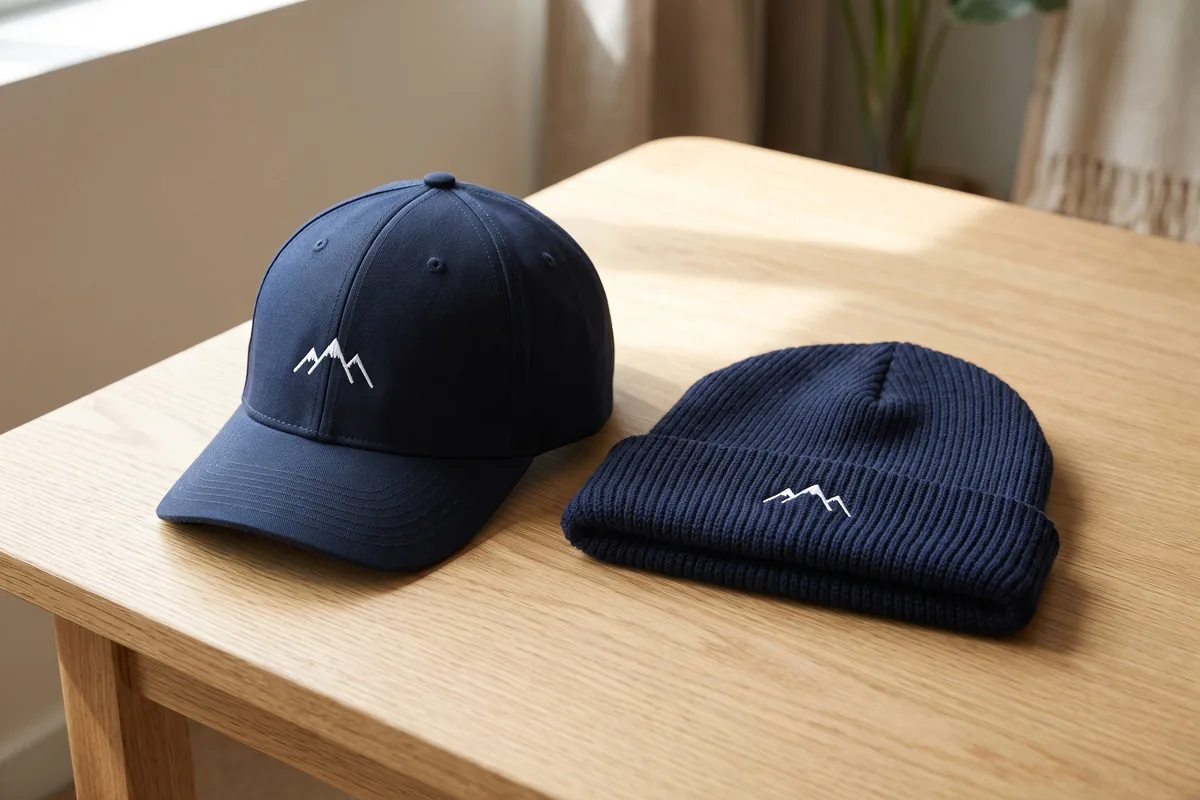
A few things help both look like they belong to the same uniform:
- Use the same thread colours and logo version on both, approved from the same proof.
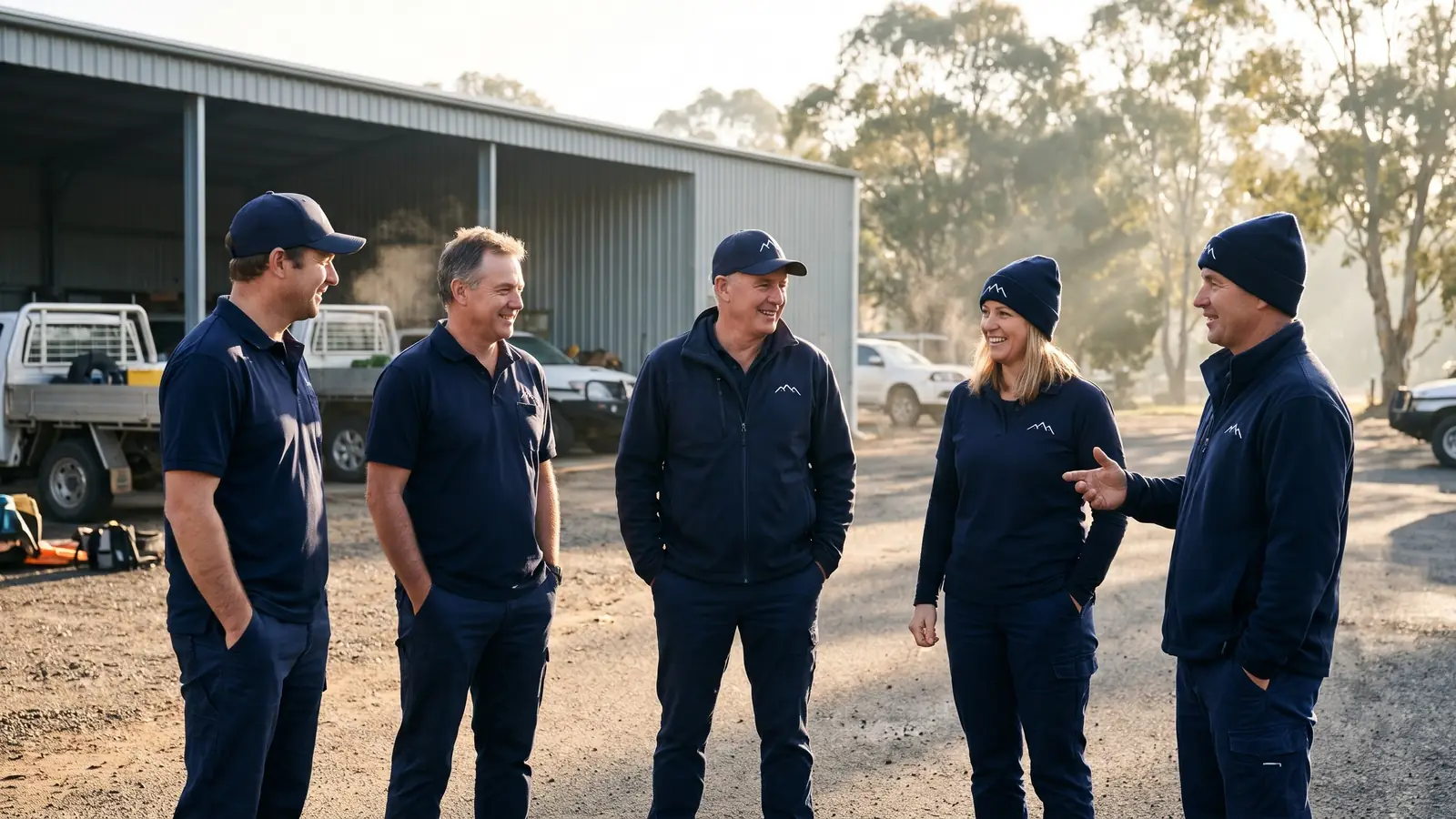
- Pick hat colours from the rest of the uniform, such as navy caps and beanies with navy polos.
- Ask for a sewn sample before the full run, especially if the logo is detailed or the hat colour is close to the thread colour.
Crest Promos supplies a free digital proof for every cap and beanie, showing the logo size and position on the exact style you've chosen.
Issuing both through the year
Quantities and minimum order quantities
A common approach is to issue two caps per person, so one can be washed while the other is worn, and one beanie, because it's only worn part of the year. Adjustable caps and one-size beanies suit groups with varied head sizes, whereas fitted caps only work when you know the size range in advance. Add a small buffer of the common colours for new starters, and keep a record of who has received what so reissues don't double up. Minimum order quantities vary by style and decoration method, so check the listing for caps or beanies, or ask us.
Timing
Order beanies by March for southern sites, so staff have them ready for the first cold mornings in May. Stock beanies sell through quickly once winter starts, and popular colours can run out. Caps can be ordered at any time of year, but if you're launching a new uniform, give them the same lead time as the rest of the garments. Our standard turnaround is 10 to 14 business days from proof approval.
Uniform policy
Write the rules into your uniform policy. Say which hat is part of the compulsory uniform, when each one can be worn and whether staff can wear their own caps on cold or sunny days. If the hat is compulsory, many modern awards require the employer to supply it or reimburse the cost, so check the uniform clause in the award or agreement that covers your team. Our guide to managing a uniform rollout across multiple locations covers policy and sizing in more detail.
Replacement
Caps worn outdoors every day usually fade and lose their shape within a year or two, and a good knit beanie lasts a few winters. Plan a yearly reorder of caps and a smaller top-up of beanies for new starters, using the same approved artwork on file so every new hat matches the old ones.
Ordering caps and beanies with Crest Promos
Crest Promos supplies embroidered caps and beanies for team uniforms, from a single site to national rollouts, with delivery Australia-wide. Tell us where your team works, what they do and how many people need hats, and we'll suggest styles that suit the climate and the job, with a free digital proof and an itemised quote before you commit. We can hold stock of your caps and beanies and send them to each site as needed, so new starters get the same hat as everyone else.
"The question I ask first is where the team works and what time they start. A crew in Canberra starting at 6 am needs something very different from a cafe team in Brisbane, even if the logo is the same."
Jerome Abrahams, owner, Crest Promos
To start, send your brief through the quote form or call 1300 084 102.
Tell us where your team works and how many need hats, and we'll quote both with your logo.
About the author
Written by Jerome Abrahams, owner of Crest Promos. Jerome has more than 30 years of experience in promotional products and uniforms, supplying businesses ranging from local trades and cafes to national brands such as Meta, JCDecaux, Nutrien, White Claw and amps.
The product advice in this article is based on the caps and beanies Crest Promos supplies for uniforms. Climate figures and safety guidance were checked against the sources below in November 2026.
- Bureau of Meteorology, Average rainfall and temperatures for Australian capital cities, 1981 to 2010 averages (Perth 1994 to 2021)
- Cancer Council Australia, Be SunSmart
- ARPANSA, Sun protection: hats
- Food Standards Australia New Zealand, Health and hygiene advice for food handlers
- Crest Promos, Branded headwear compared
- Crest Promos, What is the best branded headwear for outdoor work teams?
- Crest Promos, How do I manage a uniform rollout across multiple locations?