Last updated November 2026.
If you're asking how do I make my company merch more sustainable, the biggest improvement most businesses and organisations can make is to order fewer, better items that people will keep and use for years. After that, match order quantities to real needs, choose durable materials and decoration, cut back on packaging and freight, and plan what happens to leftover stock and old uniforms. Recycled or organic materials help, but they come further down the list than most people expect. A recycled tote bag that nobody uses still ends up in landfill.
For any business ordering branded merchandise such as uniforms, client gifts, staff kits or event giveaways, this matters because over-ordering cheap or low-quality items creates waste, unnecessary cost and landfill, while longer-lasting merch reduces environmental impact and supports a stronger brand. The changes below focus on the practical decisions that make the biggest difference, from smarter quantities and durable, certified materials to lower-impact decoration, shipping, stock management and honest sustainability claims. The list is ranked roughly from biggest impact to smallest. You don't need to do all of them at once. Most businesses can make the first few changes on their next order without spending more.
"The most sustainable order I quote is usually a smaller one. A few hundred good drink bottles people use every day do more good than a thousand cheap pens with a recycled label that end up in a drawer."
Jerome Abrahams, owner, Crest Promos
Changes at a glance
| Change | Impact | Effect on cost | Effort |
|---|---|---|---|
| Stop ordering items people don't use | High | Usually saves money | Low |
| Order quantities closer to real need | High | Saves money, slightly higher unit price | Low |
| Choose durable products and decoration | High | Higher unit price, lower overall spend over time | Low |
| Hold stock and reorder in smaller runs | Medium | Neutral | Medium |
| Choose recycled, organic or certified materials | Medium | Usually costs more per item | Low |
| Cut packaging and individual wrapping | Medium | Saves money | Low |
| Consolidate deliveries and use local stock | Low to medium | Saves money | Medium |
| Plan for leftover stock and old uniforms | Medium | Small cost | Medium |
Impact here means how much waste and wasted spend a change usually prevents. A business ordering a few hundred items a year will see most of its improvement from the first three rows.
Order less, and order better with eco friendly branded merchandise
Start with what you already order
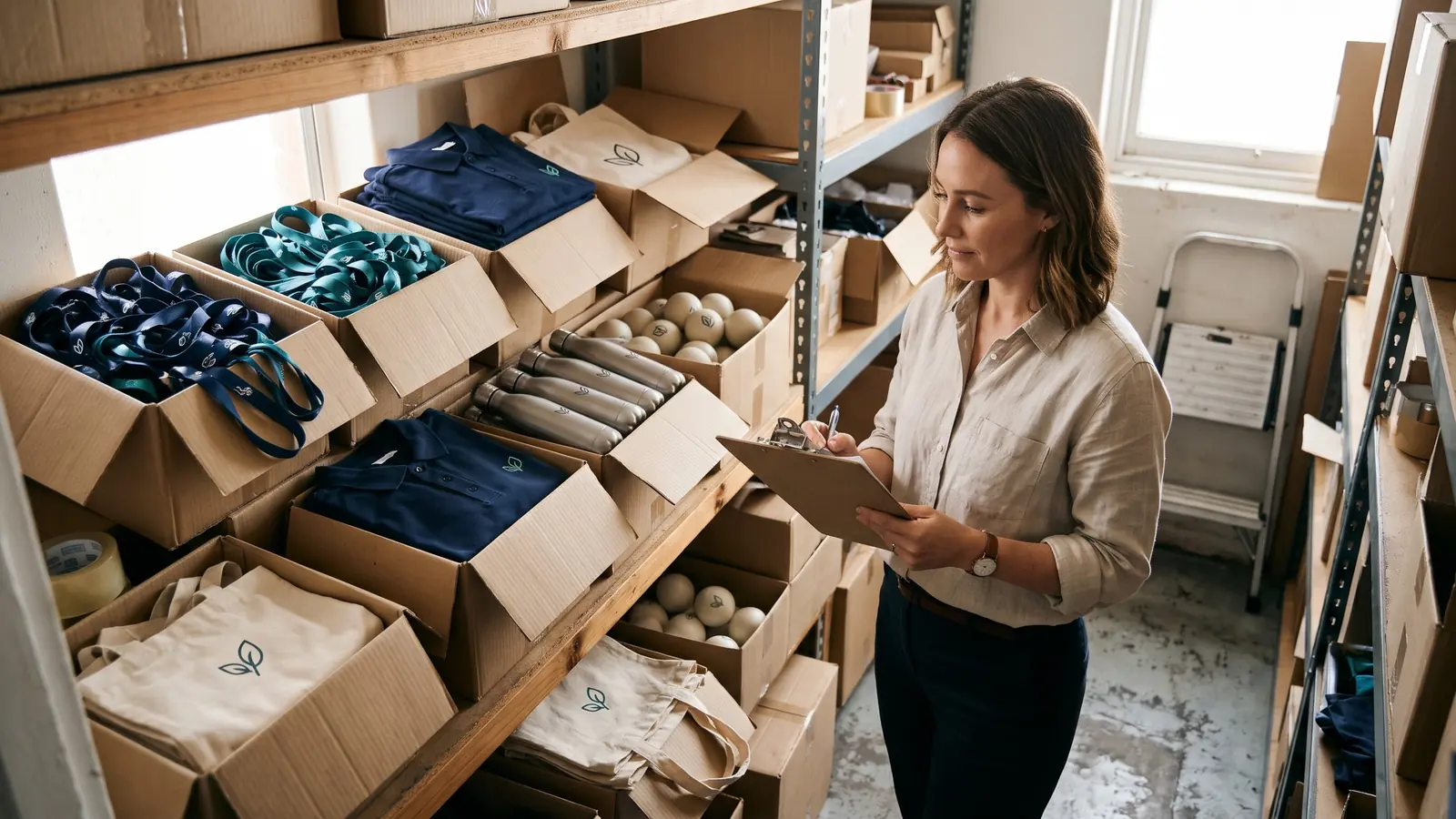
Pull together everything your business has ordered with a logo on it over the last year or two. Include event giveaways, staff uniforms, welcome packs, client gifts and anything ordered by individual teams. For each line, note the quantity, what it cost and roughly how much is left in a cupboard or storeroom.
The leftovers tell you a lot. Boxes of conference lanyards, stress balls from three campaigns ago and polos in sizes nobody wears are money spent on items that never reached anyone. Most businesses that do this find at least one product they can stop ordering altogether.
Choose items people keep
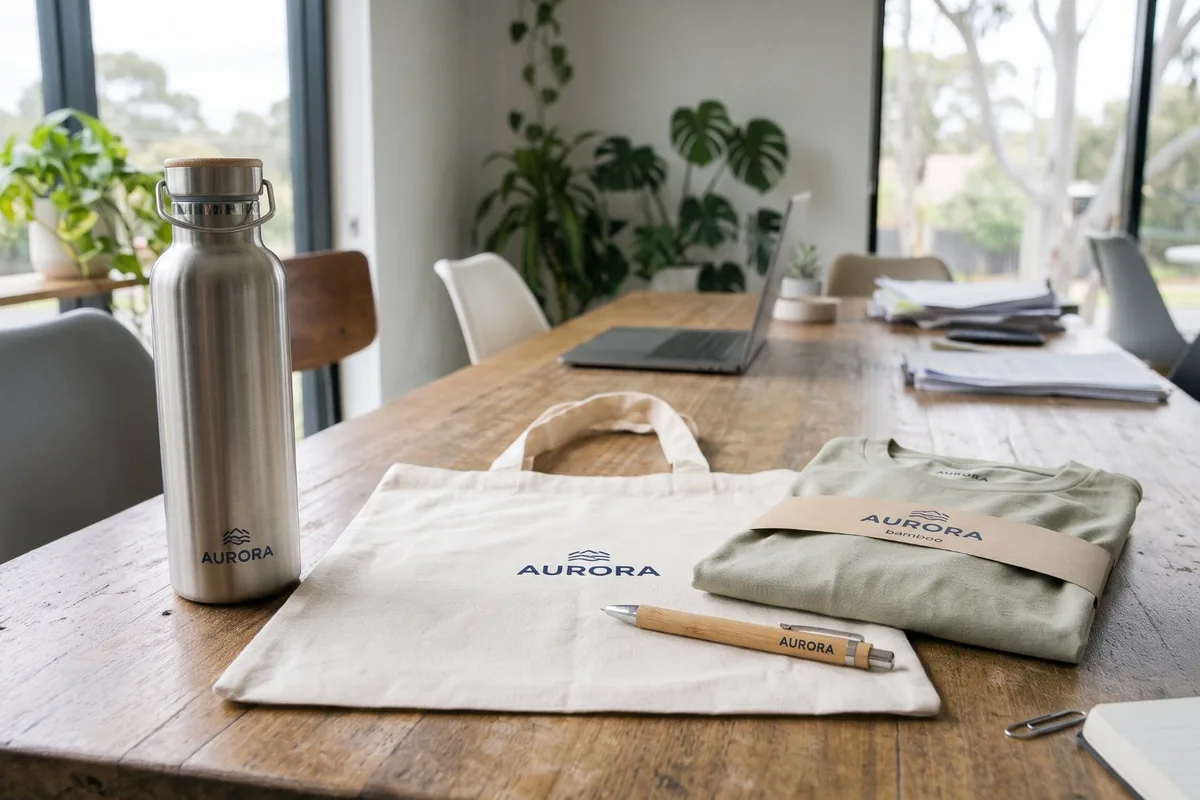
Sustainable merch is a practical choice for long use. A product that's used every week for years builds more brand awareness than one used once, and it does far less harm per use. T-shirts, tote bags, reusable coffee cups, water bottles, quality umbrellas, good pens, practical tech accessories and comfortable apparel are everyday items people are more likely to keep, rather than treat as disposable giveaways. Timeless design helps useful products stay in circulation. Novelty items, cheap plastic gadgets and anything trend-based tend to be thrown out.
Before approving any product, ask whether it is one of the durable items people would actually keep and use. If the honest answer is no, your customers and staff probably won't use it either. Well-chosen items can also support customer loyalty, because people keep using products that are genuinely useful. Our guide to eco-friendly promotional products compares the products that tend to last.
Order closer to real numbers
Over-ordering is common because larger quantities lower the price per item. A 1,000-unit order at $2 an item sounds cheaper than a 400-unit order at $3, but if 600 of the cheaper items end up in storage and then in landfill, you've paid $2,000 for 400 items in use, or $5 each.
Base event quantities on expected attendance rather than venue capacity, and base staff orders on headcount plus a small buffer for new starters. If your supplier can hold stock for you, order a larger run once and draw on it as needed, rather than reordering in a panic or buying far more than you need up front.
Make apparel last with recycled polyester
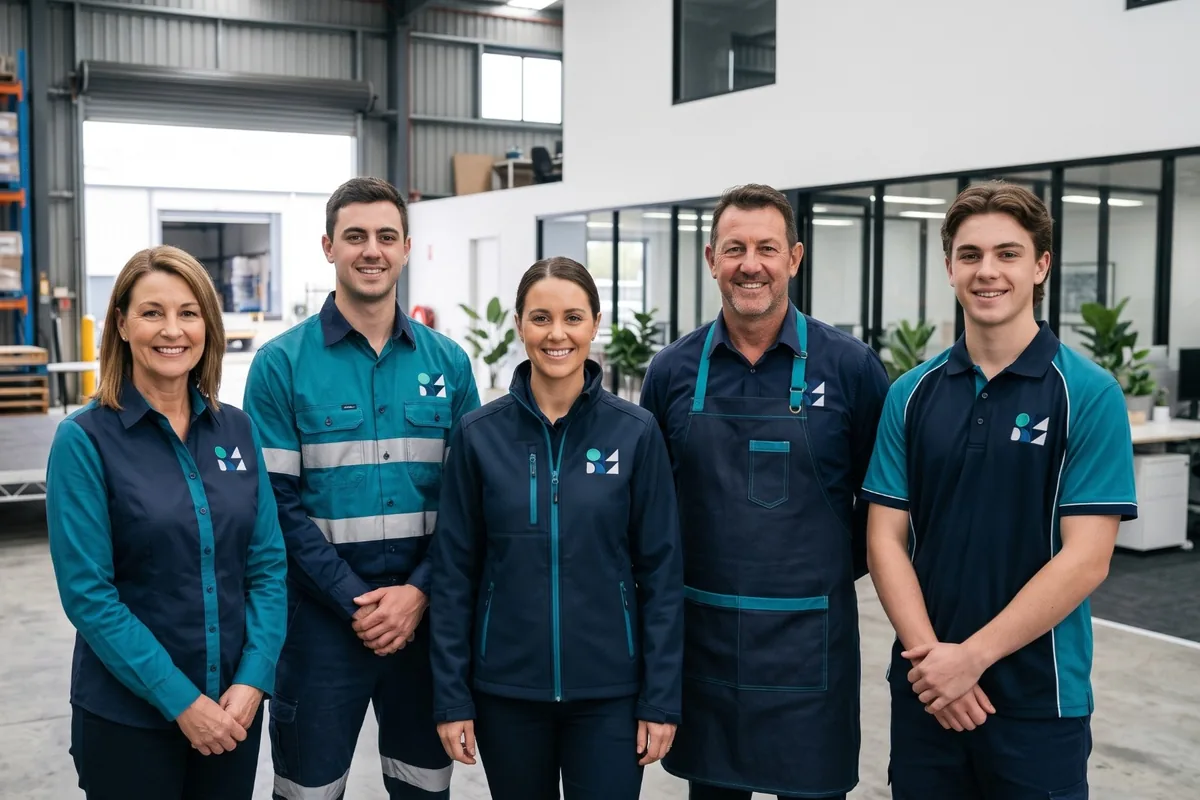
Uniforms and branded clothing are where long-lasting, sustainable clothing and custom apparel decisions matter most. Waste from clothing is a growing concern across the fashion world, and workwear is part of it. A heavier-weight fabric, reinforced seams and embroidery rather than a cheap transfer print can add years to the life of a garment. When comparing suppliers, the right materials and ethical production practices both count as sustainable fashion practices, so ask about how garments are made as well as what they're made from.
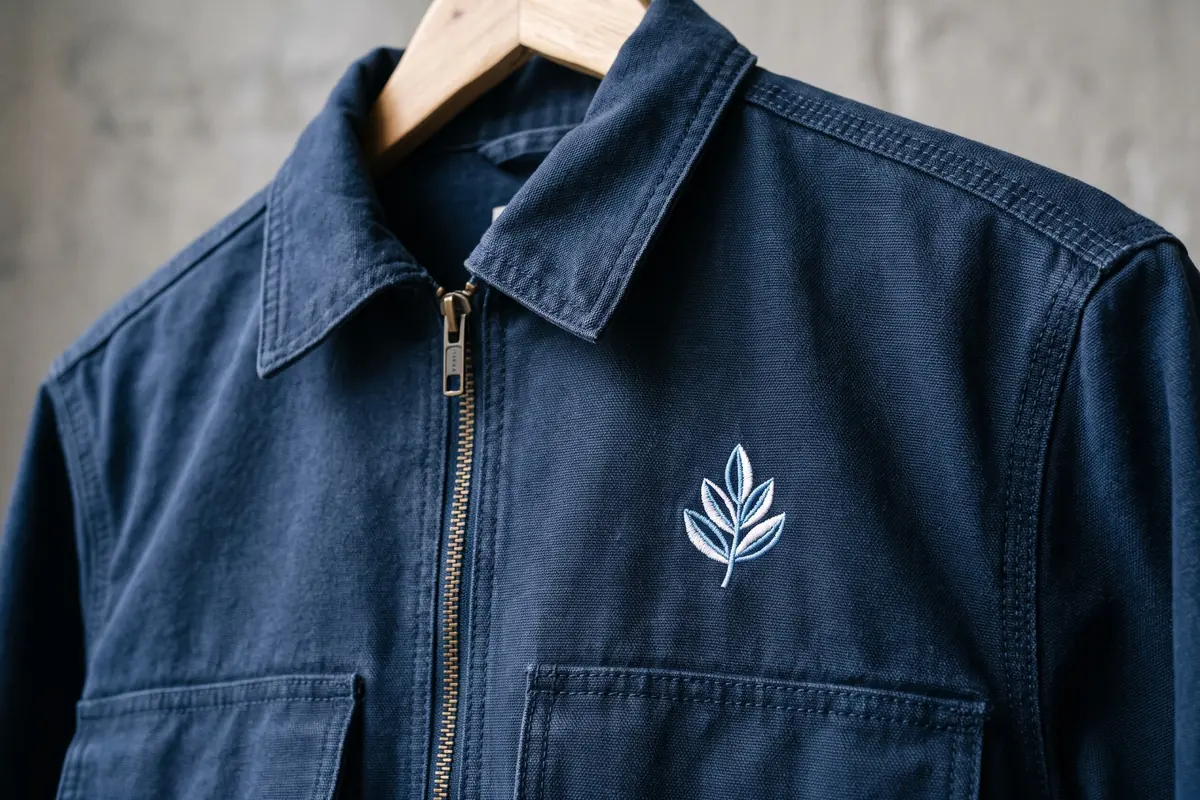
Choose core styles and colours that stay in a supplier's range for years, so you can replace individual items without reissuing a whole set because the old style was discontinued. For uniforms, quality products that last longer are often the better sustainable option. Organic cotton, recycled blends and recycled polyester can reduce reliance on virgin inputs, and fabrics from regenerative farms are getting more attention because farming practices can improve soil health. Our guide to choosing a uniform supplier covers range continuity in more detail.
Materials, decoration, packaging and freight: environmental impact
Sustainable materials and certifications
Once you've chosen products people will keep, better materials are the next step. Low-impact, circular materials are central to sustainable merchandise, so look for a recognised certification rather than a general description if you want proof behind claims about sustainable materials and lower impact materials.
| Certification | What it covers | Common on |
|---|---|---|
| GOTS (Global Organic Textile Standard) | Organic cotton fibre content plus environmental and social criteria in processing | Cotton tees, totes, hoodies |
| GRS (Global Recycled Standard) | Recycled content, traced through the supply chain | Recycled polyester apparel, bags, bottles |
| OEKO-TEX Standard 100 | Textiles tested for harmful substances | Apparel, towels, lanyards |
| FSC | Paper and wood from responsibly managed forests | Notebooks, packaging, pencils, wooden items |
Certified materials give you something concrete behind ethical sourcing claims. Organic cotton is grown without synthetic pesticides and fertilisers, and cotton certified to the Global Organic Textile Standard also has limits on the chemicals used in dyeing and processing.
Be careful with materials that sound natural but involve heavy processing. Fabric sold as bamboo, for example, is often bamboo viscose, which is made with chemical solvents. It can still be a reasonable choice, but it shouldn't be described as natural, chemical-free or antibacterial.
Recycled stainless steel, aluminium and recycled PET are good options for drinkware and bags, and pens or notebooks made from recycled materials can also work well. Ask for the percentage of recycled content and the certification that backs it up. Recycled materials help cut plastic waste and reduce reliance on virgin inputs, and recycled polyester replaces new polyester made from fossil fuels. Hemp needs less water than conventional cotton, and Tencel lyocell is made from wood pulp, with the main brand sourcing it from certified forests.
Decoration
The decoration method affects how long an item stays in use. Laser engraving uses no inks and lasts as long as the product. Embroidery outlasts most prints on apparel. For printing, ask about screen printing with water-based inks, which avoids the PVC used in standard plastisol inks. Avoid large plastic transfers on garments meant to last, because they crack and peel and the garment gets retired early.
A smaller, well-placed logo also helps. People are more likely to wear a jacket or carry a bag on the weekend when the branding is subtle, which keeps the item in use for longer.
Packaging
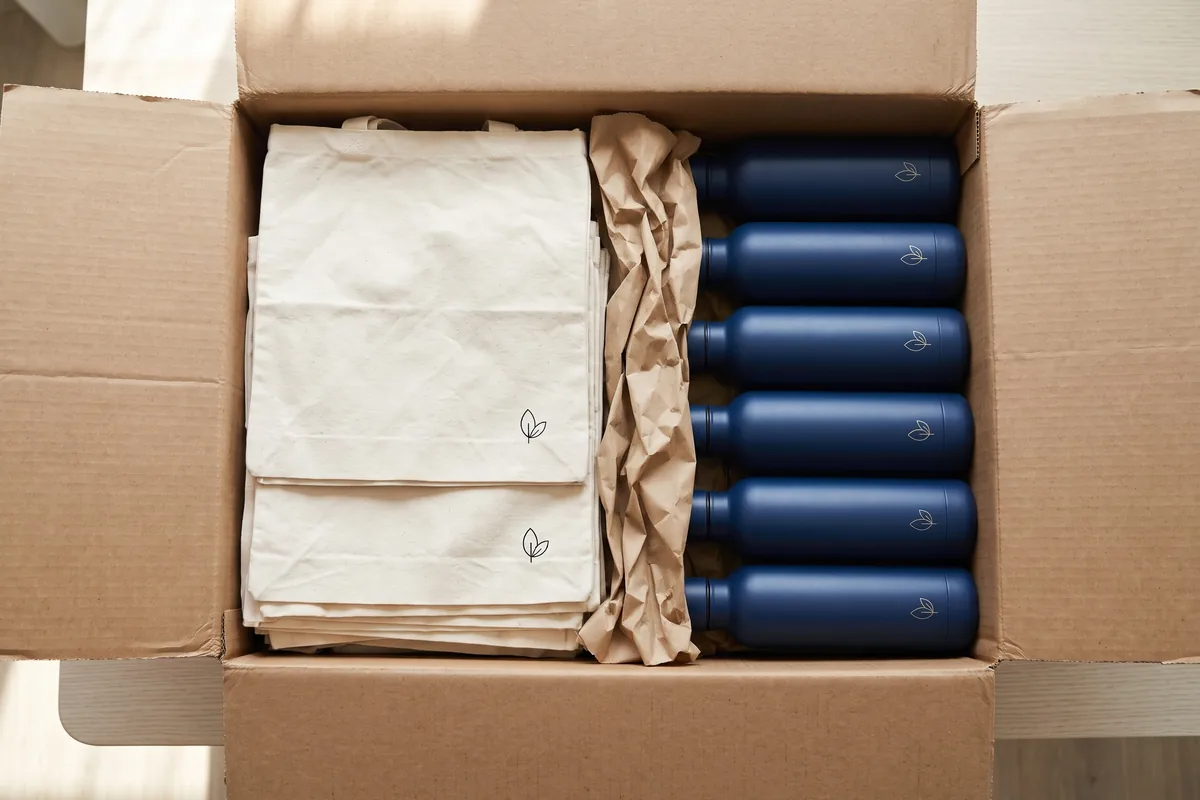
Individual plastic bags, plastic inserts and oversized gift boxes add waste when they go straight in the bin. Ask your supplier to bulk pack where items don't need protecting, use cardboard rather than plastic where possible, keep packaging minimal and skip individual wrapping on items that will be handed out together. If you do want gift presentation, choose packaging that can be reused or recycled at home, and check whether it carries the Australasian Recycling Label, which tells the recipient how to dispose of each part.
Freight
Air freight produces far more emissions per kilogram than sea or road freight. Ordering from stock held in Australia, giving your supplier enough lead time to avoid rush air shipments and consolidating deliveries into fewer, fuller consignments all reduce freight emissions. Planning ahead is one of the cheapest sustainability improvements you can make, and fewer, fuller deliveries usually lower freight costs as well.
Leftover stock and old uniforms
Clothing is often the hardest part of a merch program to deal with once it's finished with. The Australian Fashion Council estimates more than 200,000 tonnes of clothing goes to landfill in Australia each year, and its Seamless scheme is working with the clothing industry to cut that through better design, collection and recycling. Branded workwear is harder to deal with than everyday clothing, because many charities can't pass on garments with a company logo.
For uniforms and leftover stock:
- Collect old uniforms when you issue new ones, rather than leaving staff to throw them out. For some businesses this is also a security issue, because branded clothing in circulation can be used to impersonate staff.
- Ask your supplier or a textile recycler about removing or covering logos so garments can be reused, or about recycling programs that turn worn-out workwear into fibre or industrial materials instead of landfill.
- Keep a small stock of common sizes instead of reissuing full sets, so staff replace only what's actually worn out.
- For leftover giveaways, use them in welcome packs, give them to local schools, sports clubs or community groups, or offer them to staff before they go anywhere else.
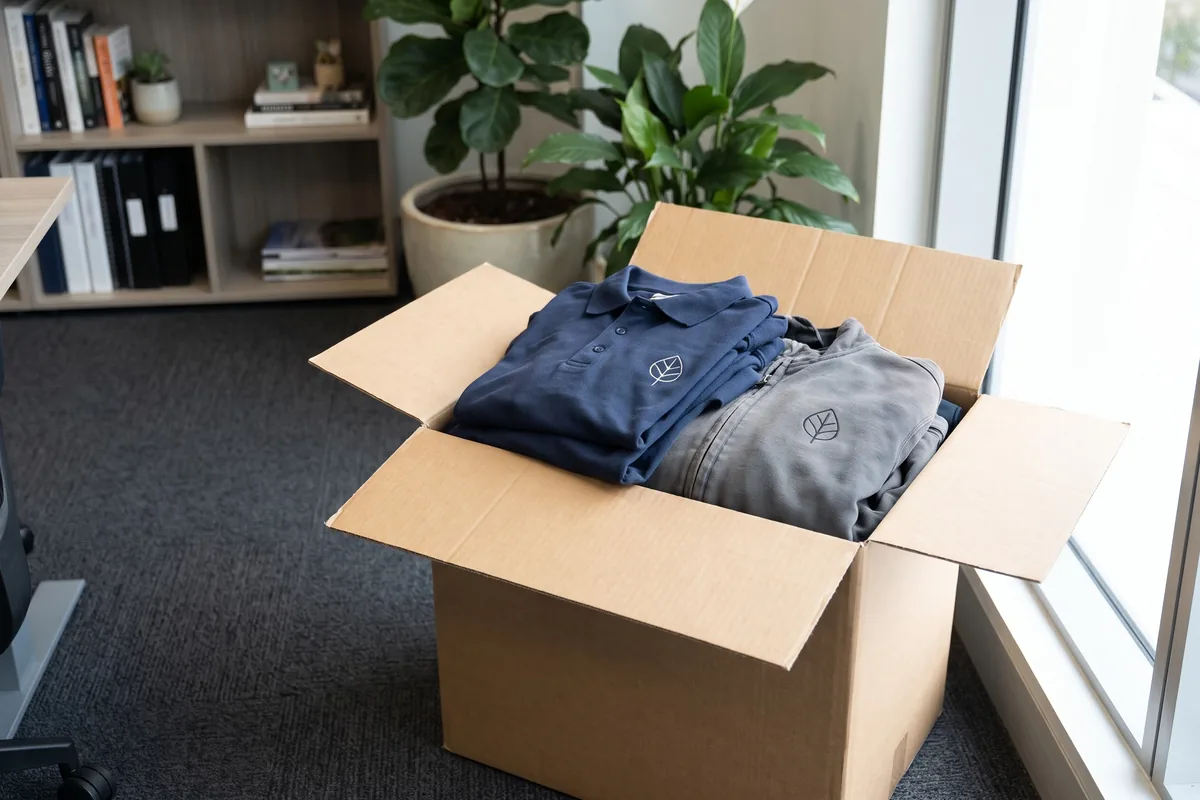
It also helps to think about the end of life before you order. Single-material products, such as a plain stainless bottle or a 100% cotton tote, are much easier to recycle than items that combine plastic, metal, electronics and fabric.
Talking about it honestly
Once you've made changes, it's natural to want to mention them, on the product, in a social post or in your sustainability report. Any claim needs to be specific and backed by evidence, because clear substantiation protects brand credibility and customer trust. The ACCC's guide for business, Making environmental claims, sets out eight principles, including making accurate claims, having evidence for them and avoiding broad terms such as "eco-friendly" or "sustainable" without qualification.
In practice, a line such as "Made from 100% GRS-certified recycled polyester" can be checked and backed up, while a phrase like "our eco friendly products" gives people nothing to check. If a product or your program has a real improvement, describe that improvement exactly. Our guide to sustainable branded merchandise covers greenwashing in more detail, including a claim that led to an $8.25 million penalty.
Working on it with Crest Promos
If you'd like help reviewing your merch program, send us a list of what you've ordered over the last year and what's left over, and we'll help you plan more sustainable branded merchandise without adding waste. We'll quote certified recycled and organic options alongside standard ones so you can see the price difference, and we'll tell you what each certification covers, so your merch buying lines up with your company's sustainability goals. Ask us about holding stock and sending it out in smaller lots, which avoids over-ordering for staff and events, and we'll bulk pack wherever an item doesn't need individual wrapping.
"I'd rather talk a client out of an order than sell them something that ends up in a skip. They come back, and they trust what we recommend the next time."
Jerome Abrahams, owner, Crest Promos
To start, send your list through the quote form or call 1300 084 102.
Send us what you ordered last year, and we'll quote standard and certified options side by side.
About the author
Written by Jerome Abrahams, owner of Crest Promos. Jerome has more than 30 years of experience in promotional products, uniforms and corporate gifts, supplying businesses ranging from local clubs and trades to national brands such as Meta, JCDecaux, Nutrien, White Claw and amps.
The advice in this article is based on the orders Crest Promos handles and the questions clients ask when they want to reduce waste. Figures and regulatory information were checked against the sources below in November 2026.
- ACCC, Making environmental claims: a guide for business, December 2023
- ACCC, Environmental and sustainability claims
- Australian Fashion Council, Roadmap to Clothing Circularity (2023)
- Seamless, Australia's clothing stewardship scheme
- Global Organic Textile Standard (GOTS)
- Textile Exchange, Global Recycled Standard
- OEKO-TEX, Standard 100
- Forest Stewardship Council Australia and New Zealand
- Australasian Recycling Label
- Crest Promos, Sustainable branded merchandise
- Crest Promos, What should I look for in a company uniform supplier?