Custom hoodies in Australia typically cost between $35 and $90 per garment, take one to three weeks to produce and can be ordered from as few as one unit. Those three numbers hide a lot of decisions, though. The fabric you pick, the way your logo goes on, how many you order and when you place the order all change what you pay and what turns up at your door.
Hoodies are one of the hardest working pieces of branded apparel. A good one gets worn on the school run, on site at 6am, at Saturday sport and on the couch. That means your logo travels further and lasts longer than it does on almost any other promotional item. It also means a cheap, thin hoodie that pills after three washes says something about your brand too.
This guide walks through everything you need to know before ordering custom hoodies in Australia: who uses them, how to choose the garment, which decoration method suits your artwork, realistic pricing, minimums and lead times, hi-vis compliance, Australian made options and a practical pre-order checklist.
"The question I hear most is 'how much for a hoodie?' The honest answer is that the garment, the artwork and the deadline set the price. Once you understand those three things, you can get a far better hoodie for the same budget."
Jerome Abrahams, owner, Crest Promos
Written with: Jerome Abrahams, owner of Crest Promos, an Australian promotional products company known for its customer service and for pushing for quality across the industry. Jerome has spent more than 30 years sourcing and decorating branded apparel for [businesses, sporting clubs, schools and events] across Australia.
How we put it together: Pricing, minimums and turnaround ranges were checked against published 2026 pricing from Australian decorators and blank suppliers, then compared with what Crest Promos sees on real orders. Garment specs come from manufacturer product listings. Hi-vis guidance references AS/NZS 4602.1:2011. Sources are listed at the end.
Last reviewed: October 2026. Prices change with fabric costs and freight, so treat every figure as a guide and get a written quote.
Who orders custom hoodies in Australia
Most custom hoodie orders fall into one of six groups, and each has different priorities.
- Businesses and staff uniforms. Hoodies are now a standard part of the uniform for tech companies, cafes, warehouses, gyms and agencies. Staff wear them daily and wash them weekly, so durability and a tidy embroidered logo usually matter more than a big graphic.
- Trades and outdoor crews. Builders, landscapers, sparkies and transport teams need warmth on early starts. Some sites require hi-vis, which brings Australian Standards into play (more on that below).
- Sporting clubs. Footy, netball, cricket and surf clubs order hoodies for players, coaches and supporters. Club crests, sponsor logos and player names or numbers on the back are common. Teams often also want matching options for the whole family.
- Schools and leavers. Year 12 leavers hoodies and jerseys are a rite of passage in Australia. They often include every student's name, so they need more design and approval time than a simple logo run.
- Events and corporate gifting. Conferences, fun runs, festivals and end of year gifts. Deadlines are fixed and immovable, so lead time is the biggest risk.
- Merch and streetwear brands. Bands, creators and small labels selling hoodies to fans care most about fabric feel, fit and print quality, because their customers are paying full retail.
Working out which group you sit in first makes every later decision easier. A club wants to spread value across 80 sizes. A streetwear label wants a 400 GSM heavyweight with a soft print. A trade business wants embroidery that survives two years of industrial washing.
"Before we talk fabric or print, I ask who's wearing it and how often. A hoodie for a one-day fun run and a hoodie a tradie wears five mornings a week are completely different jobs."
Jerome Abrahams, owner, Crest Promos
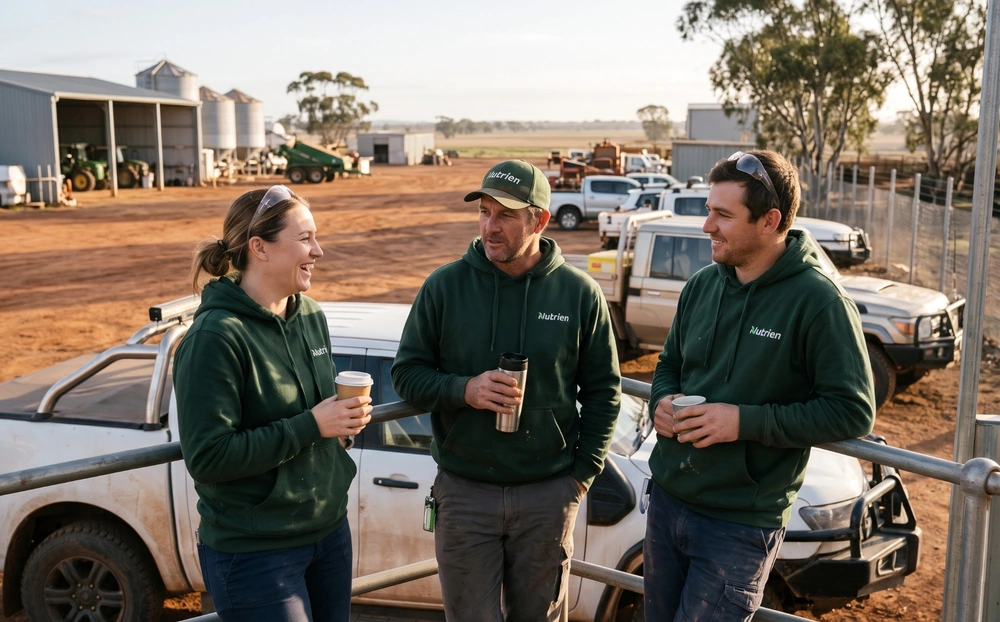
Staff uniform hoodies with an embroidered left chest logo, worn on a farm site
Choosing the right hoodie blank
The blank is the plain hoodie before anything is printed or stitched on it, and it decides how the finished product feels, fits and lasts. Decoration gets most of the attention, but the garment is usually the bigger share of the price and the bigger driver of whether people actually wear it.
Fabric weight (GSM)
GSM stands for grams per square metre. The higher the number, the thicker and heavier the fabric. As a rough guide for Australian conditions:
| Weight | Feel | Best for |
|---|---|---|
| 250 to 300 GSM | Light, easy to layer | Queensland and northern winters, events, budget runs |
| 300 to 350 GSM | Midweight, the all-rounder | Staff uniforms, clubs, schools |
| 350 to 400 GSM | Heavyweight, structured | Retail merch, premium staff gifts, southern winters |
| 450 GSM and up | Very heavy, boxy drape | Streetwear drops, top tier merch |
For reference, the AS Colour Stencil Hood, one of the most popular blanks in Australian print shops, is a 350 GSM, 80% cotton and 20% polyester anti-pill fleece. The AS Colour Heavy Hood steps up to 400 GSM, and the AS Colour Made Hoodie sits at a hefty 500 GSM French terry.
Fabric blend
- Cotton-rich blends (around 80/20). Soft, breathable and a great print surface. The polyester adds strength and helps the garment hold its shape.
- Polyester-rich blends. Hardier, quicker drying and more colourfast, which is why most workwear and hi-vis hoodies lean this way.
- 100% cotton or organic cotton. The most natural feel and a strong sustainability story, usually at a higher price.
Look for anti-pill fleece and preshrunk fabric. Both make a noticeable difference after a few months of washing.
Style and fit
Pullover hoodies are the default and give the largest uninterrupted front print area; a traditional hoodie usually includes a kangaroo pocket. Zip hoodies suit staff who layer and remove them through the day, but the zip splits the front, so logos usually move to the left chest or the back. Also decide between unisex, men's and women's cuts. Unisex keeps ordering simple. Separate cuts look better on a mixed team.
Popular blank brands in Australia
Australian decorators most often work with AS Colour, Aussie Pacific, JB's Wear, Fashion Biz (Biz Collection and Syzmik) and Ramo. AS Colour leans fashion and retail. Aussie Pacific and JB's Wear are workhorses for clubs, schools and uniforms. Syzmik covers workwear and hi-vis. Ask your supplier for a sample of the exact style and colour before committing to a large run.
"Never approve a bulk run off a website photo. Get the actual hoodie in your hands. Colours look different on screen, and you only feel the difference between 300 and 400 GSM when you pick it up."
Jerome Abrahams, owner, Crest Promos
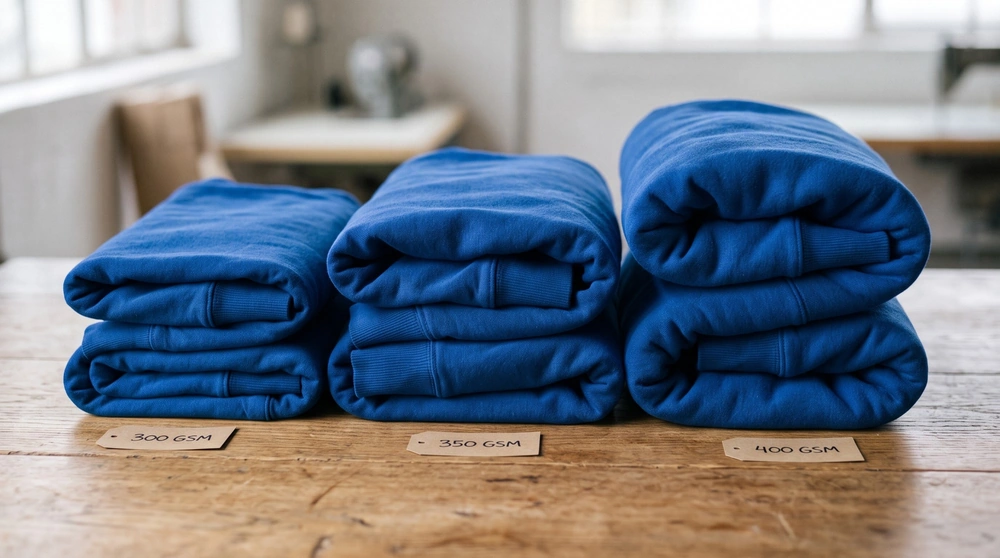
300, 350 and 400 GSM blanks folded side by side to show the difference in thickness
Printing methods: screen print, embroidery, DTF and DTG
The right decoration method depends on three things: how many colours are in your artwork, how big the design is and how many hoodies you are ordering. Here is how the four main options compare.
Screen printing
Screen printing pushes ink through a fine mesh stencil onto the fabric, with a separate screen made for every colour in the design. That setup cost is why screen printing has minimums (commonly 25 units per design in Australia) and why it gets cheaper per unit the more you order. Once the screens are made, it is fast, consistent and produces bold, vibrant prints that last for years.
Best for: one to four colour logos and graphics, large front or back prints, orders of 25 or more.
Watch out for: gradients, photos and designs with lots of colours, which push up setup costs.
Embroidery
Embroidery stitches thread directly into the garment, giving a raised, textured finish. Your logo is first digitised into a stitch file, which is a one-off setup cost (typically between $45 and $95 in Australia). After that, the price per garment is driven by stitch count, so a bigger or denser logo costs more.
Embroidery is the most durable option of the lot. With no printed surface to crack or peel, it usually outlasts the hoodie itself, which is why it dominates corporate and staff uniforms.
Best for: left chest logos, sleeve and hood details, uniforms that get washed every week.
Watch out for: very fine text and tiny details, which do not stitch cleanly. Large back designs get expensive fast.
DTF (direct to film)
DTF prints your design onto a special film, which is then heat pressed onto the hoodie. Because it is digital, a full colour design costs the same to set up as a single colour one. It handles gradients, photos and fine detail well and works on cotton, polyester and blends. DTF has become one of the most common methods for small to medium hoodie runs in Australia.
Best for: detailed artwork, small runs, mixed designs within one order, full colour graphics.
Watch out for: a slightly thicker, glossier feel than screen print on large solid areas.
DTG (direct to garment)
DTG works like an inkjet printer for fabric, printing straight onto the hoodie. It produces a soft hand feel and suits photographic artwork on cotton-rich blanks. It is the backbone of many print on demand services, but it is less common for bulk hoodie work because of speed and cost.
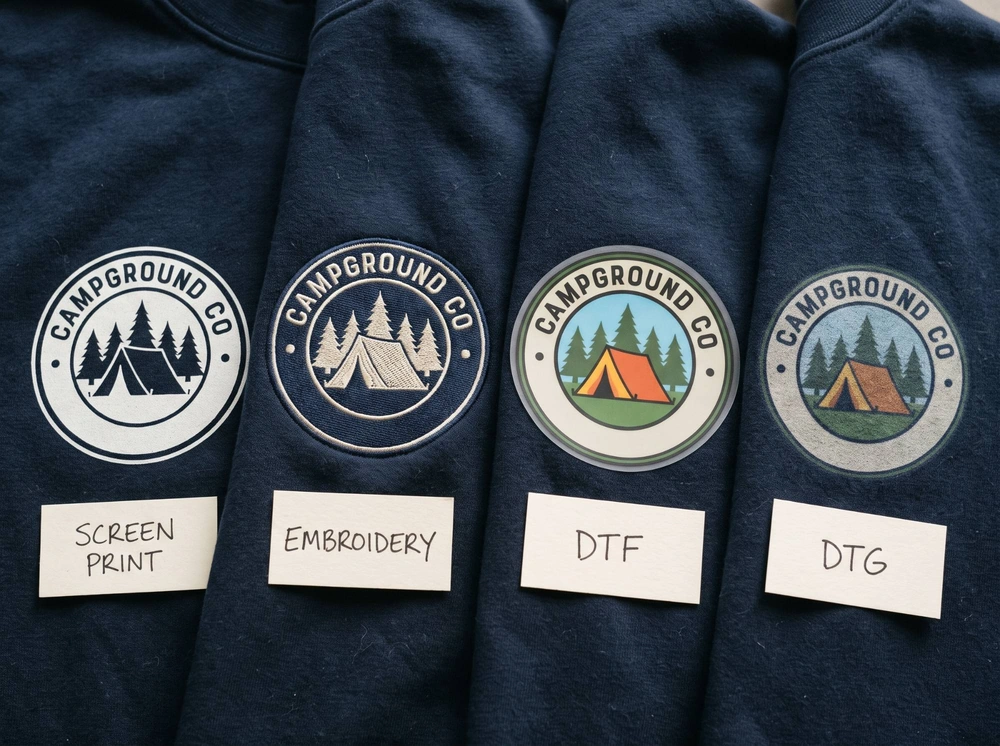
One logo on the same navy blank in all four methods: screen print, embroidery, DTF and DTG
Which method should you choose?
| Your order | Usually the best fit |
|---|---|
| 1 to 9 hoodies, any artwork | DTF or embroidery |
| 25 to 49 hoodies, simple logo | Screen print |
| 25 to 49 hoodies, detailed artwork | DTF |
| 50 or more, bold one to three colour design | Screen print |
| Staff uniforms, small chest logo | Embroidery |
| Merch with a big back print plus chest logo | Screen print or DTF on the back, embroidery on the chest |
Many businesses combine methods: an embroidered logo on the chest for a premium look, with a larger print on the back for events or campaigns.
"The most common mistake is forcing a detailed logo into embroidery because it feels premium. If your logo has fine text or gradients, a simplified stitched version on the chest and a printed version on the back usually looks far better."
Jerome Abrahams, owner, Crest Promos
How much do custom hoodies cost in Australia?
Most custom hoodie orders in Australia land between $35 and $90 per unit, with entry level unisex hoodies starting around $25 to $35 ex GST at volume and premium heavyweight or technical styles running past $100. Based on published pricing from Australian decorators in 2026, these are realistic ranges:
| Hoodie type | Typical price per unit |
|---|---|
| Basic printed hoodie | $35 to $55 |
| Embroidered hoodie | $50 to $85 |
| Premium or heavyweight branded hoodie | $60 to $90+ |
| Certified hi-vis day/night hoodie (blank) | Around $80 to $90 before branding |
Treat these as ballparks, not quotes. The final number depends on the following.
- Quantity. The biggest lever. Setup costs are spread across the run, so 30 hoodies and 300 hoodies of the same design can have very different unit prices.
- The blank. A 400 GSM retail hoodie can cost double a 300 GSM uniform hoodie before anything is printed on it.
- Number of print colours. Each extra colour in a screen print adds a screen and setup time.
- Number of print locations. Front, back, sleeve and hood are each priced separately.
- Stitch count. For embroidery, bigger and denser logos cost more. A small 5,000 stitch chest logo is far cheaper per garment than a 25,000 stitch design.
- Setup fees. Screen setup, digitising and small order fees are often listed separately. Repeat orders with the same artwork usually skip them.
- Extras. Individual names, custom neck labels, individual bagging and rush production all add cost.
- GST and freight. Many suppliers quote ex GST. Check whether shipping is included.
The cheapest way to keep costs down is to simplify the artwork to fewer colours, limit print locations to the ones that matter and order everything in one run rather than topping up later.
"When comparing quotes, line them up item by item: garment, decoration, setup and freight. A cheap headline price can hide a thinner blank or a pile of setup fees."
Jerome Abrahams, owner, Crest Promos
Minimum orders and turnaround times
Minimum order quantities
Minimums exist because of setup work, and they vary by method. Across Australian suppliers, the common pattern is:
- Screen printing: usually 25 units per design.
- Embroidery and DTF: often 10 units, and some suppliers have no minimum at all.
- Locally decorated hoodies: commonly start at 20 units.
- Custom cut and sew hoodies: commonly require 10 units.
- Print on demand services: a single hoodie, but at a higher per-unit price and with limited blank choice.
- Bulk promotional suppliers: minimums of 25 to 100 units are common, with price breaks at 50, 100 and 250.
You can usually split a minimum across sizes, and sometimes across colours of the same style. Ask before assuming, because the minimum order quantity is usually per design.
How long custom hoodies take
Standard production in Australia is typically one to three weeks from artwork approval, with many decorators quoting 7 to 14 business days. Local Australian printers are usually faster than offshore options, and straightforward locally decorated hoodies often dispatch within 3 to 10 business days. That clock starts when you approve the proof, not when you first enquire, so allow extra time for quoting, artwork tweaks and sizing.
Longer timeframes apply to:
- Fully custom made or sublimated garments, which are cut and sewn to order and can take four to eight weeks.
- School leavers gear with individual names, which suppliers often quote at six to eight weeks from approval.
- Out of stock blanks. Popular colours and sizes sell out, especially XS and 3XL and up.
Order before the rush
Hoodie demand in Australia peaks in autumn and winter. Decorators get busy from March, and leavers orders stack up through the second half of the year. If you need hoodies for winter, order in summer. If you need them for a specific event, work back from the date and allow at least four weeks for a standard order. Rush services exist, but they cost more and leave no room for a reprint if something goes wrong.
"Every year we get calls in May from people who need 60 hoodies in a week, and that's when popular sizes and colours are running out. If you know you'll need winter gear, the time to sort it is summer."
Jerome Abrahams, owner, Crest Promos
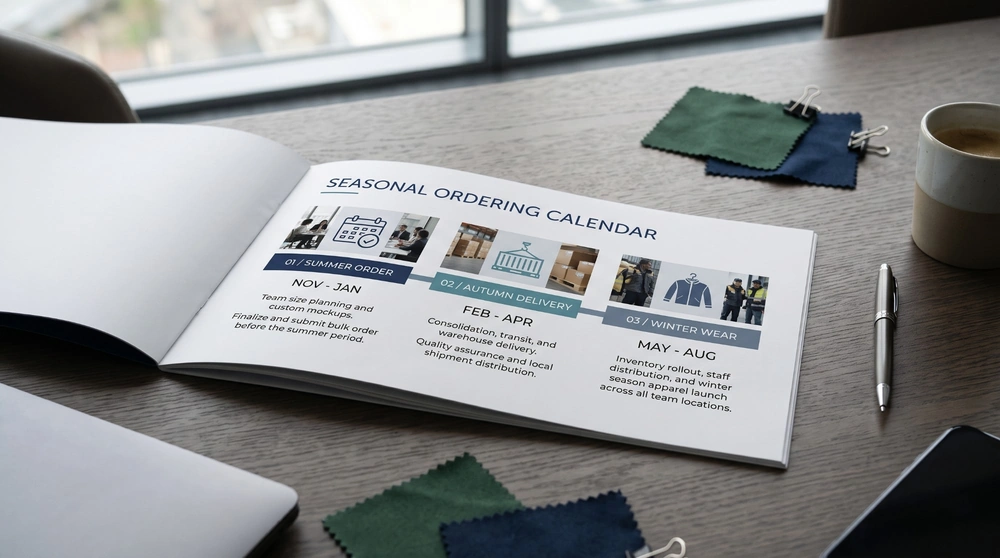
Order over summer, take delivery in autumn, wear it all winter
Workwear and hi-vis hoodies
If your team works around traffic, machinery or low light, a fashion hoodie in fluoro yellow is not enough. In Australia, high visibility garments need to comply with AS/NZS 4602.1:2011, and the standard sorts them into three classes:
- Class D: day use only, relying on fluorescent fabric.
- Class N: night use only, relying on retroreflective tape.
- Class D/N: day and night, combining both. This is the most common requirement on Australian worksites.
When ordering custom hi-vis hoodies, check that the garment label states AS/NZS 4602.1 compliance and the class (D, N or D/N). Labels showing European or US "Class 1, 2 or 3" ratings without the AS/NZS mark do not prove compliance here.
Branding also needs care. Logos should not cover the reflective tape or reduce the fluorescent area the garment relies on to comply. Most decorators place hi-vis logos on the left chest, in the non-fluoro contrast panel or on the back between tape bands. Embroidery and DTF are the usual methods because they handle polyester-rich hi-vis fabrics well.
Hoods themselves can limit peripheral vision, so check whether your site rules allow hooded garments before ordering.
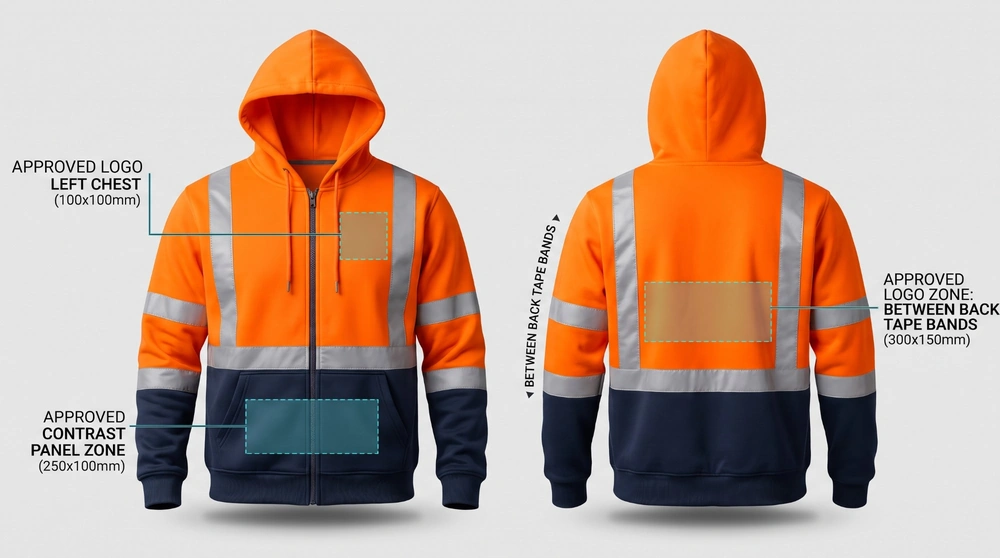
Approved logo zones on a day/night hi-vis hoodie: left chest, contrast panel, and between the back tape bands
Australian made and ethically sourced hoodies
Most custom hoodies sold in Australia are made offshore and decorated locally. That is not a problem in itself, but if local manufacturing or supply chain ethics matter to your brand, ask specific questions rather than relying on vague claims.
- "Printed in Australia" is not "made in Australia". The garment may be imported even if the decoration happens in Brisbane or Melbourne.
- Ethical Clothing Australia (ECA) is a not for profit accreditation body. Accredited businesses have their Australian manufacturing supply chain audited each year, from design and cutting through to sewing and dispatch, to check that workers (including outworkers) are paid correctly and work in safe conditions.
- Recycled and organic blanks. Several popular blank brands now offer organic cotton or recycled polyester versions of their best sellers, usually at a modest premium.
Australian made and ECA accredited hoodies cost more and have longer lead times, but for government, education and values-led brands they are often worth it.
Pre-order checklist: artwork, sizing and proofs
Most custom hoodie problems are avoidable. Work through this list before you approve anything.
- Supply vector artwork. An AI, EPS, SVG or PDF file scales cleanly. A low resolution JPEG pulled from your website usually needs redrawing, which costs time and sometimes money.
- Match your brand colours. Give your supplier Pantone references, not just hex codes. Fabric colour also affects how ink looks, especially on heathered or dark blanks.
- Simplify for embroidery. Thin lines, small text and gradients do not stitch well.
- Choose sensible sizes and placements. A standard left chest logo is around 8 to 10cm wide. A full back print typically sits around 28 to 30cm wide on adult sizes.
- Get a real size breakdown. Collect sizes from your team rather than guessing. Most bulk orders skew towards M to XL, and hoodie fits vary between brands.
- Order a sample for big runs. For orders of 100 or more, a single physical sample is cheap insurance.
- Check the proof carefully. Confirm spelling, colours, placement, size, garment style and colour, quantities per size and the delivery date in writing.
- Confirm care instructions. Washing inside out in cold water and skipping the dryer will add years to any printed hoodie.
"Sizing causes more headaches than artwork. Get your team to try on samples or give you real sizes, and add a few spare in the most common sizes for new starters."
Jerome Abrahams, owner, Crest Promos
Custom hoodies FAQs
Yes. Print on demand services and many DTF and embroidery decorators offer single units. Expect a higher per-unit price than a bulk order, as setup costs are not spread across a run.
Is embroidery or printing better on a hoodie?+Embroidery is more durable and looks more premium for small logos. Printing (screen print or DTF) suits large designs, detailed artwork and multiple colours. For staff uniforms, choose embroidery. For event and merch hoodies with a big back design, choose printing.
What GSM is a good quality hoodie?+For most uses, 300 to 350 GSM is the sweet spot. Go to 380 GSM or heavier for premium retail merch or for cold climates like Melbourne, Canberra and Hobart. In Queensland and northern Australia, a lighter hoodie often gets worn more.
Can I supply my own hoodies to be decorated?+Some decorators will, but many prefer to supply the garment themselves so they can guarantee the result. Supplied garments usually carry no warranty if they are damaged during printing.
How far in advance should I order?+Allow at least three to four weeks for a standard order and six to eight weeks for leavers hoodies or fully custom garments. Order earlier ahead of winter.
Can each hoodie have a different name on it?+Yes. Names and numbers are usually added with DTF, vinyl or embroidery as a separate line item. Supply a clear spreadsheet of names against sizes to avoid errors.
Do custom hoodie prices include GST?+Not always. Many Australian suppliers quote ex GST, so add 10% when comparing against a GST inclusive price. Check whether freight and setup fees are included too. A personalised order is usually non-refundable once production starts, unless there is a fault.
Can you match my exact brand colours?+Screen printing inks can be mixed to Pantone references for a close match. Embroidery uses the nearest available thread colour, and DTF prints in full colour from your file. Results also shift slightly depending on the hoodie colour underneath.
How should I wash a custom hoodie?+Turn it inside out, wash cold with like colours, skip bleach and the dryer and don't iron directly over the print. Hanging it in the shade helps both the fabric and the decoration last.
Hoodie or crew neck jumper?+Hoodies are more popular for merch, clubs and outdoor teams. Crew necks look slightly more corporate and suit front-of-house staff, offices and sites where hoods aren't permitted.
Are there sustainable custom hoodie options?+Yes. Organic cotton and recycled polyester versions of popular blanks are widely available in Australia, and Ethical Clothing Australia accredited makers offer locally made garments with audited supply chains.
Can I reorder the same hoodies later?+Usually, yes. Suppliers keep your artwork and embroidery files, so repeat orders often skip setup fees. Blank styles and colours can be discontinued, though, so ask your supplier to confirm availability before each reorder.
"Ask questions before you order, not after. A good supplier would rather spend ten minutes on the phone with you than reprint 50 hoodies."
Jerome Abrahams, owner, Crest Promos
Getting custom hoodies right
The best custom hoodie is the one people keep pulling on. Start with who will wear it and how often, choose a blank that suits the climate and the wearer, then match the decoration method to your artwork and quantity. Lock in sizes early, check the proof line by line and give yourself more lead time than you think you need, especially heading into winter.
Get those decisions right and a custom hoodie stops being a line item and becomes a piece of your brand that gets worn for years. When you are ready, send your artwork, rough quantities and deadline and ask for a quote that breaks out the garment, decoration and setup costs, so you can compare options properly.
Send your artwork, quantities and date. We'll come back with three options, itemised, within one business day.
- [Decorator and blank supplier price lists, 2026]
- [Manufacturer product listings: AS Colour, Aussie Pacific, JB's Wear, Fashion Biz, Ramo]
- AS/NZS 4602.1:2011 High visibility safety garments
- Ethical Clothing Australia, accreditation overview