Last updated November 2026. Written by Jerome Abrahams, owner of Crest Promos.
The best promotional items for a small business are useful, well-made products that people keep in their kitchen, car, bag or toolbox, ordered in small enough quantities that nothing sits in a cupboard. For most small businesses that means a short list of practical promotional merchandise that supports broader marketing goals: quality pens, tote bags, drink bottles and coffee cups, umbrellas, caps, notebooks and practical tech like power banks and cables. Uniform pieces, such as polos and jackets, do double duty for staff and customers.
Which of these suits you depends on what you want the item to do, who you're giving it to, whether your audience will actually keep and use it, and how much you can spend per person.
The advice below is aimed at owners and managers ordering a few hundred items at a time. It comes from more than 30 years of supplying small businesses, and from what our clients tell us gets used and what gets thrown out.
"Small businesses don't have budget to waste on stock that sits in a box. I'd rather a client ordered 100 pens they'll actually hand out than 1,000 because the price per pen looked better."
Jerome Abrahams, owner, Crest Promos
Start with the job the item needs to do
A promotional item has one main job, and the right product depends on which job it is. Decide the message or outcome first, and the shortlist gets much shorter.
| The job | What works | Why |
|---|---|---|
| Keep your number handy for the next time someone needs you | Fridge magnets, calendars, notepads, stubby holders | They sit where people are when they need a tradie or a local service |
| Be seen around town | Tote bags, caps, umbrellas, drink bottles | Other people see them every time they're used in public |
| Make your team look professional | Polos, caps, jackets, name badges | Customers can tell who works there, and staff look like a team |
| Thank a client or reward a referral | Premium drinkware, quality pens, brand-name gifts | A better item says the relationship matters |
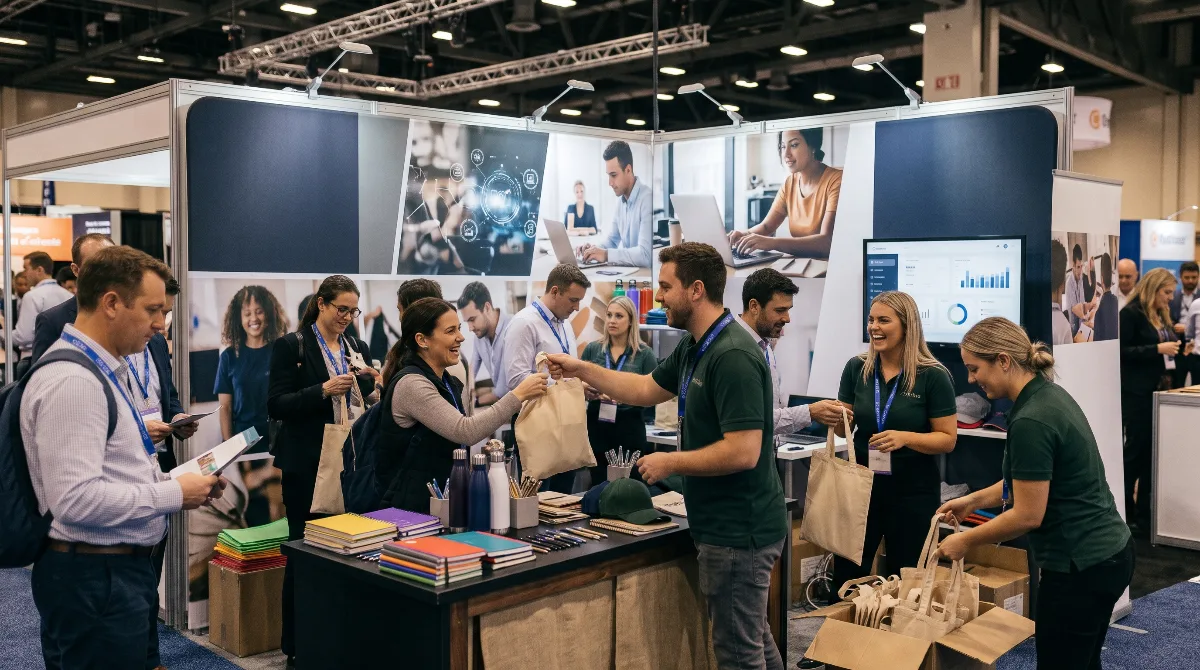
| Draw people to a stall, market or expo | Pens, lip balm, lollies, small tech | Low cost per item, easy to hand out in numbers |
| Welcome a new customer or staff member | A small pack of two or three useful items | It makes the first week feel organised and memorable |
Whatever the job, effective promotional products start with usefulness, because that is what keeps an item in circulation. The Advertising Specialty Institute (ASI), a US industry body, surveys thousands of consumers about the promotional products they receive. When US consumers were asked why they would keep one, being useful came first by a wide margin.
The same study found 78% of US consumers would have a more favourable view of an advertiser after receiving a promotional item from it. These are US figures rather than Australian ones, so treat them as a guide, but the pattern matches what we see with our own clients. The items that get kept are the ones people use every week, and that is how promotional products work over time: they keep a business visible and top of mind.
Our top picks for branded merchandise for small businesses
These are the promotional products we recommend most often to small businesses, because they're useful, they last and they can be ordered in small quantities. Your price will depend on the exact product, quantity and decoration, and some options are especially budget-friendly, so ask for an itemised quote that shows the price and minimum for each line.
| Item | Best for |
|---|---|
| Quality pens | Counters, waiting rooms, events, signing paperwork |
| Reusable tote bags | Markets, retail, events, public carry and local visibility |
| Drink bottles | Staff, clients, gyms, outdoor trades |
| Coffee cups and tumblers | Cafes, offices, client gifts |
| Umbrellas | Client gifts, real estate, professional services |
| Caps | Staff uniforms, sports clubs, outdoor events |
| Branded notebooks | Professional services, conferences, welcome packs |
| Fridge magnets | Trades, local services, letterbox drops |
| Power banks and cables | Tech-savvy clients, travel, younger audiences |
| Polos and jackets | Staff uniforms, teams, volunteers |
| Stubby holders | Trades, local events, sports sponsorships |
| Lip balm and sunscreen | Outdoor events, summer markets, health businesses |
A few notes on the list
Pens are the cheapest way to get your name into lots of hands, but a cheap pen that skips or snaps reflects on you. When choosing pens, spend a little more on branded pens that write smoothly, and keep the logo and phone number on the barrel.
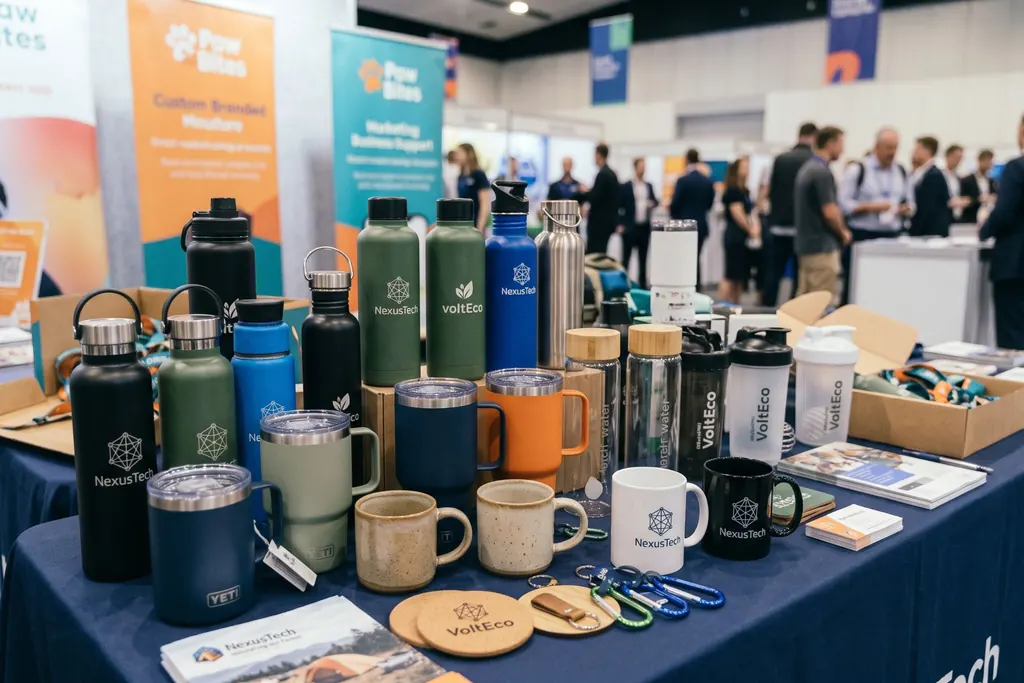
Drink bottles and coffee cups are among the most-used items in any range, and a good one can stay in daily use for years, giving you repeated exposure that builds brand recognition. Insulated stainless steel is worth the extra over plastic for gifts. Our guide to branded drinkware compares the styles in more detail.
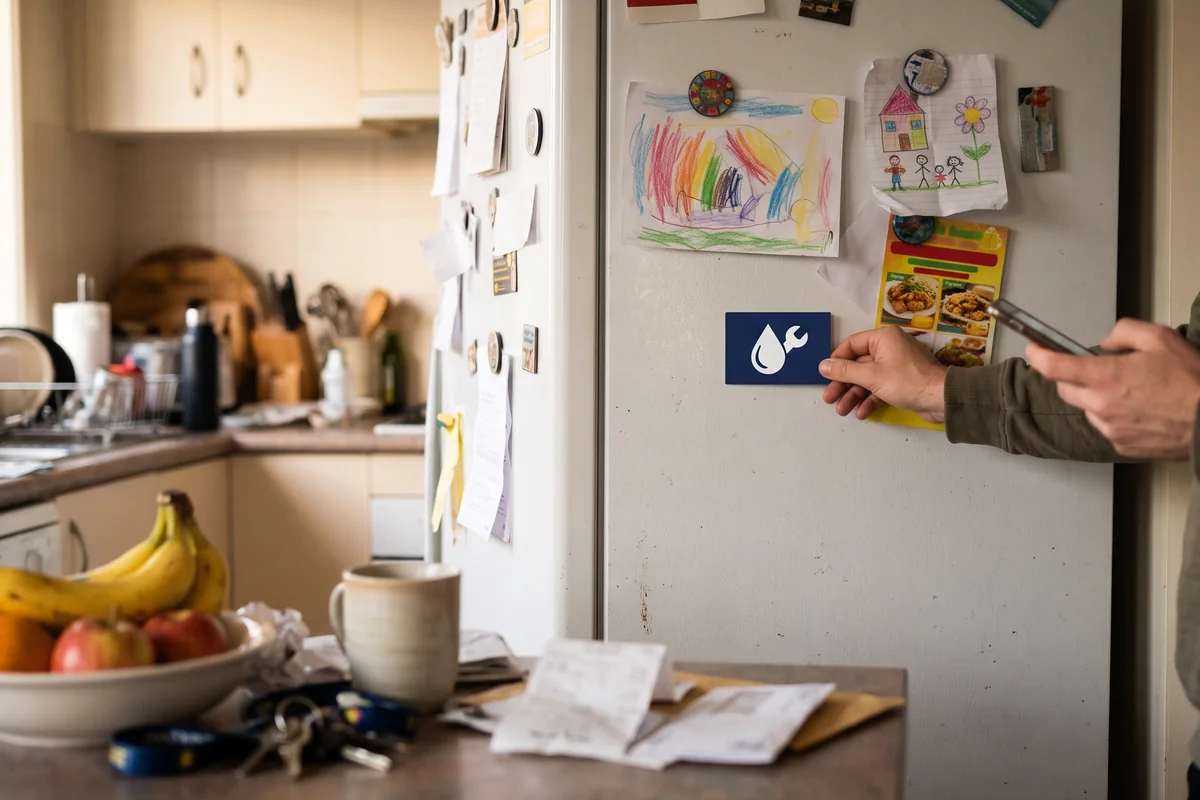
Fridge magnets look old-fashioned, but for trades and local services they still do their job well. A magnet with your name and number on the fridge is there the day the hot water system breaks.
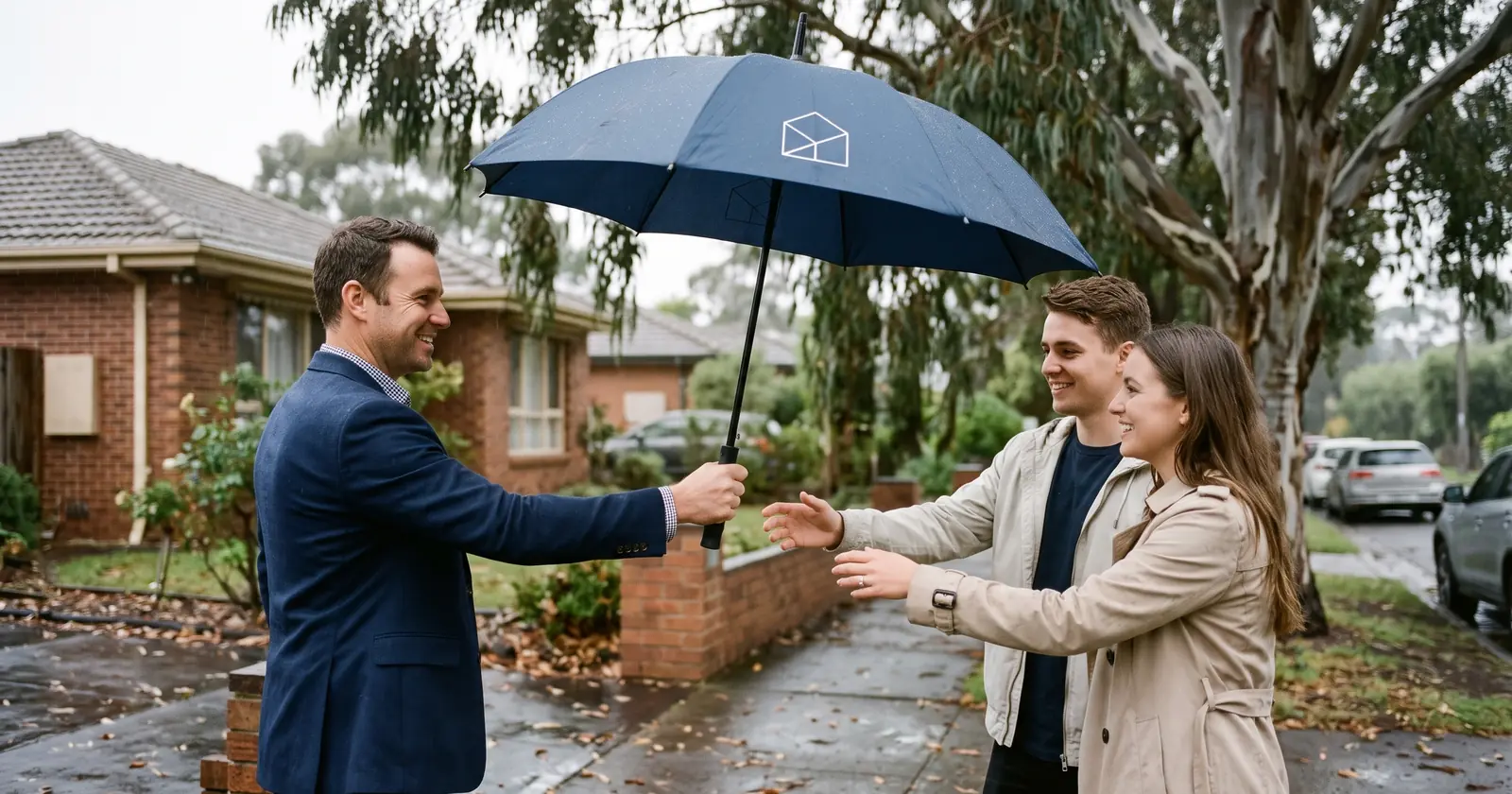
Umbrellas are one of the larger branding surfaces you can buy, with plenty of room for your logo, and they're carried through busy streets every time it rains. A golf-size umbrella makes a good client gift.
Picks by type of small business
| Business | Items that work | Why they suit |
|---|---|---|
| Trades and home services | Fridge magnets, stubby holders, caps, hi-vis-friendly polos, pens | Your number is on the fridge when the next job comes up, and branded workwear makes the crew easy to spot on site |
| Cafes, bakeries and food businesses | Reusable coffee cups, tote bags, aprons, loyalty card holders | Regulars carry your cup and bag around the neighbourhood, and branded aprons tidy up the front of house |
| Allied health, dental and medical clinics | Quality pens, appointment card holders, drink bottles, staff polos | Practical, low-key items suit a clinical setting and stay with patients between appointments |
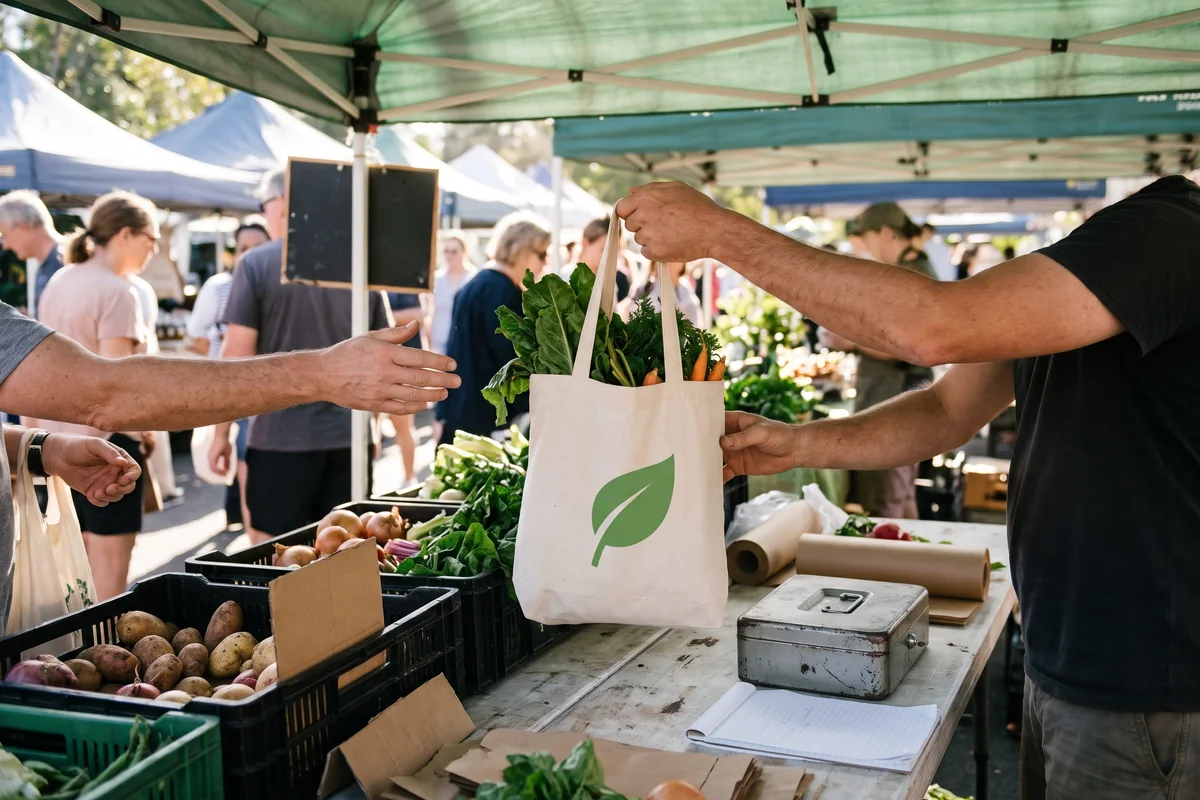
| Retail shops | Tote bags, gift-with-purchase items, staff caps or aprons | Bags keep the brand visible when customers carry them out of the store and onto the street |
| Accountants, lawyers and consultants | Notebooks, quality pens, umbrellas, insulated tumblers | A well-made item on a client's desk suits a professional relationship |
| Gyms, studios and personal trainers | Drink bottles, gym towels, tote bags, tees and singlets | Members use them during every session, and they're seen by other members |
| Real estate agents | Umbrellas, keyrings for settlement, housewarming gifts, magnets | They mark moments in a sale and keep the agent's name in the home for years |
| Sporting clubs and community groups | Caps, stubby holders, drink bottles, beanies, sponsor shirts | Members wear and use them at every game, which helps with brand visibility, and sponsors get seen |
| Startups and tech businesses | Power banks, cables, laptop sleeves, hoodies, notebooks, tech accessories | They suit a team and clients who live on their devices |
When choosing promotional merchandise, match the item to how the business runs day to day. For real estate, our guide to using promotional items to grow a real estate brand has a full 90-day plan. For new staff, see our employee welcome kit guide.
A note for health practitioners
If you're a registered health practitioner, items handed out in the clinic are fine, but take care with how you advertise them. Under the Health Practitioner Regulation National Law, advertising must not offer a gift, discount or other inducement to attract people to use a regulated health service unless the terms and conditions of the offer are also stated. A pen on the reception desk is not a problem. An ad promising a free drink bottle with every new patient booking needs its terms set out, and is worth checking against Ahpra's advertising guidelines first.
Budgets and what they buy
The examples below are illustrations built from typical small-business orders, showing how two items can work together in one order. Each is built around practical items rather than novelty giveaways. Prices depend on the products, quantities and decoration you choose, so your quote will show the cost of each line.
A small order: a local plumber
- 250 fridge magnets with the business name, phone number and website
- 50 stubby holders for regular customers and the local footy club
The magnets go out with every invoice and in letterboxes around recent jobs, and the stubby holders go to repeat customers and builders who send work.
A mid-size order: a physiotherapy clinic
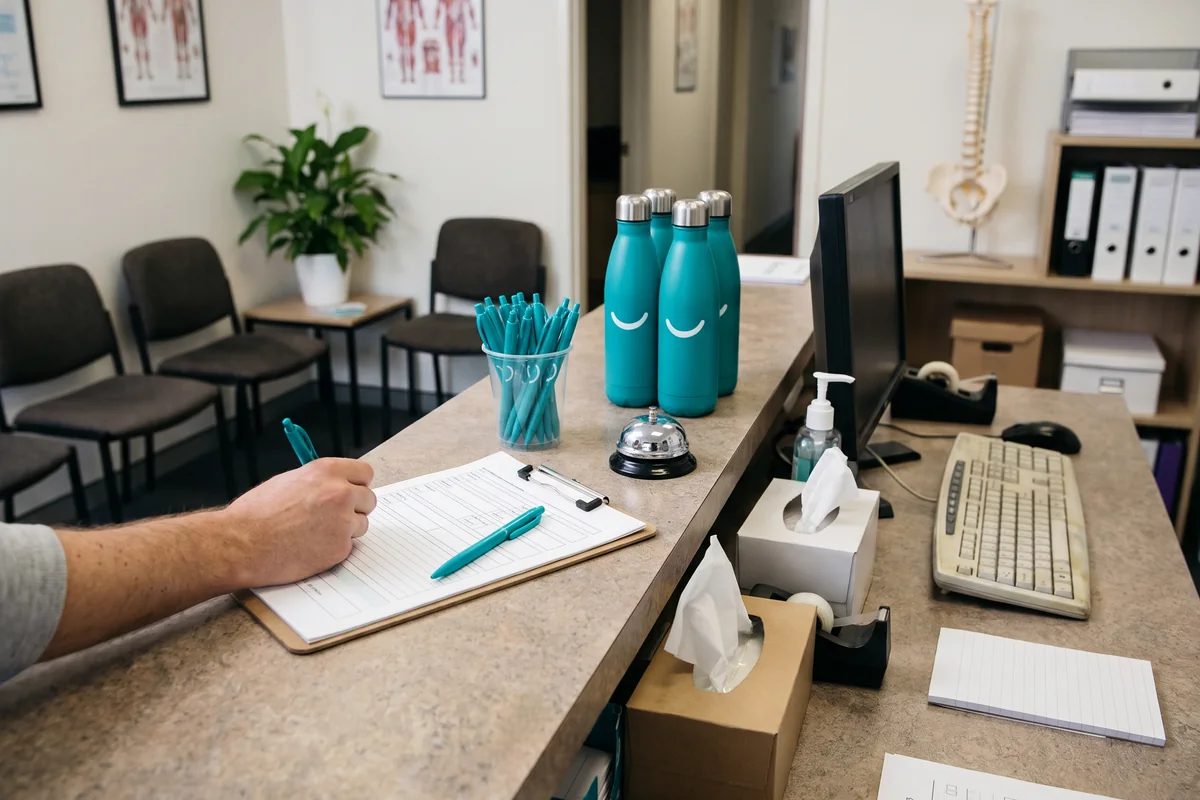
- 300 quality pens for reception and appointment cards, a budget-friendly choice for front-desk use
- 100 insulated drink bottles for new patients finishing a treatment plan
The pens are used every day at the desk and keep the clinic's name in front of patients, and the bottles go home with patients who are likely to recommend the clinic, which reinforces brand recall.
A larger order: an accounting firm with 12 staff
- Two embroidered polos for each of the 12 staff
- 150 engraved insulated tumblers for key clients at the end of the financial year
The polos make the team look consistent at client meetings, corporate events and other events, and the tumblers sit on clients' desks through the year to make a lasting impression.
Setting your own budget
A simple way to start is to work out what one new customer is worth to you over a year, then decide what you'd be comfortable spending to win or keep one without hurting brand perception. For many small businesses, a few dollars per item for prospects and a more generous spend per item for existing clients and referrers is a sensible split. Order for the next three to six months rather than the next three years, so you can test which promotional item works before you reorder.
Getting more from every item
Design it to be used
Keep the branding simple: your logo, plus a phone number or website if the item's job is to bring in enquiries. On items people use in public or at home, such as bags, bottles and caps, subtle branding is usually the better approach. A modest logo gets the item used more often than a large one, which improves brand exposure, because it looks like something people would buy for themselves. Choose a product colour that suits your brand, and print the logo in one or two colours rather than trying to reproduce every shade.
Check small text carefully. A web address or phone number that reads well on a screen can be hard to read when printed 4 mm high on the curve of a pen. Ask for a digital proof at the actual size before anything is produced.
Hand items over in person
An item handed over by a person with a reason attached, such as "thanks for coming in" or "for next time the tap leaks", tends to be remembered better than one picked up from a bowl, and it can start a conversation. Give items at moments that matter: finishing a job, signing a contract, a first visit, a referral, a trade show, a community event or a milestone.
Tracking results and brand recognition
Small businesses can measure promotional items as part of their broader marketing more easily than most people think:
- Ask every new customer how they heard about you, and keep the answers in a simple spreadsheet or your booking system.
- Put a QR code on items with space for one, such as magnets, notebooks and cards, linking to a page on your site. Add a tracking tag to the link so the visits show separately in your analytics.
- Use a distinct offer or phone extension on a single item type, so you can see which one brings in calls.
After three to six months, compare what you spent on each item with the enquiries it brought in, weigh the value of repeated brand exposure, and reorder the ones that worked.
Order with enough time
Our standard turnaround for decorated stock items is 10 to 14 business days from proof approval. Custom or overseas-made items take longer, so ask for a timeline when you request a quote. Allow extra time before Christmas, the end of the financial year and big local events, when suppliers are busiest.
Items to skip or treat with care
Some products look good in a catalogue but rarely earn their cost for a small business. Useful, well-made items usually beat novelty.
- Novelty plastic items, such as stress balls, fidget toys and cheap gadgets, are fun for a moment and usually thrown out within weeks.
- USB drives were popular for years, but fewer people use them now, and many workplaces block them for security reasons. For many recipients, portable chargers are the more useful modern alternative.
- Cheap tech is risky. A power bank or charger that fails or overheats does more harm to your reputation than no gift at all, so choose reputable brands and ask your supplier about the product's compliance.
- Low-quality t-shirts shrink, fade and end up as rags, which can hurt brand perception. If you're going to give clothing, spend enough for something people will wear in public.
- Trend items date quickly. Whatever is popular this summer can look tired by next year, when you still have a box of them.
Take extra care with anything that might end up with children. Since June 2022, mandatory standards in Australia have covered products containing button or coin batteries, including light-up badges and novelty toys, and toys for children up to 36 months must meet a mandatory standard for small parts. If an item has a battery, magnets or small pieces, ask your supplier how it's been checked.
Food and drink gifts need care too, with clear allergen labelling and enough shelf life left by the time they're handed out. And if you plan to describe an item as eco-friendly or sustainable, make sure the claim is specific and backed by evidence. Our guide to sustainable branded merchandise explains what the ACCC expects.
Frequently asked questions
Which promotional item gives the best value for a small business?
For most small businesses, a good pen, a tote bag or a reusable drink bottle gives the best mix of cost and use. Pens are the cheapest per person and suit any counter or waiting room. Bags and bottles cost more but are used for years, giving long-term exposure and more brand visibility when other people see them. Which one is best for you depends on whether you need volume, visibility or a gift that feels considered.
How small an order can I place?
Most of our hard goods, including stock drinkware, start at 50 units, and some styles go lower, while low-cost items such as pens and magnets often have higher minimums. Setup costs are spread across the order, so the price per item drops as the quantity rises. Small businesses usually do better ordering a realistic quantity at a slightly higher price than a large run that ends up in storage.
Are promotional items tax deductible?
The ATO lists advertising among the operating expenses businesses can generally claim, and branded items handed out to promote the business usually fall under that. Gifts to clients and anything that could count as entertainment have their own rules, so check how to treat your spending with your accountant or registered tax agent.
Can I mix different items in one order?
Usually, yes. Each item has its own minimum and setup, but most suppliers will quote and deliver a mixed order together, such as pens for the counter, bottles for clients and custom notebooks for meetings or welcome packs. You can also pair each notebook with a matching pen for a simple, polished set.
What logo file do I need?
A vector file, such as AI, EPS, SVG or a vector PDF, gives the cleanest result for printing, engraving and embroidery. If you only have a JPG or PNG, a supplier can often redraw it, sometimes for a small fee.
Can I get Australian-made promotional items?
Some, yes, particularly printed apparel, paper products and some drinkware and bags. Most promotional products are made overseas and decorated in Australia. If Australian-made matters to you, say so at the start, as it narrows the range and can change the price and lead time.
How long does an order take?
Our standard turnaround is 10 to 14 business days from proof approval. Custom products made to order overseas take longer, so plan those well ahead of an event or season.
Free small business promo planner
The planner turns this guide into a two-page document you can print, fill in and keep by the till or on your desk. It includes:
- A checklist of the six jobs a promotional item can do, with items to try for each
- Four questions to answer before you ask for a quote, and a checklist to run before you approve an order, from logo files and proofs to quantities and delivery dates
- A customer value calculator and an order plan and results tracker, with columns for quantity, cost, items handed out, enquiries and cost per enquiry, plus review questions for three to six months in
Download the small business promo planner (PDF)
Fill in the tracker as you hand items out, then use the review questions to decide what to reorder. You'll find more free downloads in our resources section.
Ordering with Crest Promos
Crest Promos supplies promotional items to small businesses across Australia, from a first box of pens to full uniform ranges. We have access to more than 4,000 products, including mouse pads, phone stands, bottle openers and laptop stickers, as well as gifts from brand names such as Leatherman, Ledlenser and Fjällräven. Tell us what your business does, who the items are for and roughly what you'd like to spend, whether that's for customers, staff or the kind of welcome packs many brands use, and your account manager will come back with a short list and an itemised quote. Quotes and digital proofs are free, so you can see your logo on the product before you commit.
"My advice for a first order is to pick one item, hand it out properly for three months and see what comes back. It's a far better test than spreading the same money across five different products."
Jerome Abrahams, owner, Crest Promos
Tell us what your business does and your budget, and we will send a short list and an itemised quote.
About the author
Written by Jerome Abrahams, owner of Crest Promos. Jerome has more than 30 years of experience in promotional products, uniforms and corporate gifts, and has supplied everyone from local trades, cafes and clinics to national brands such as Meta, JCDecaux, Nutrien, White Claw and amps.
Reviewed by Jerome Abrahams, owner, on 13 November 2026. The recommendations in this guide are based on the products Crest Promos supplies to small businesses and what our clients report back about how they're used. Research figures and regulatory information were checked in November 2026.
- Advertising Specialty Institute, Global Ad Impressions Study 2026 (US consumers)
- Australian Taxation Office, Deductions for other operating expenses
- ACCC, Businesses on notice as mandatory button battery laws commence, June 2022
- ACCC Product Safety Australia, Toys for children up to and including 36 months of age mandatory standard
- Ahpra, Guidelines for advertising a regulated health service
- Crest Promos, Which branded drinkware is worth buying?
- Crest Promos, How do I use promotional items to grow my real estate brand?
- Crest Promos, Sustainable branded merchandise
- Crest Promos, Employee welcome kit guide